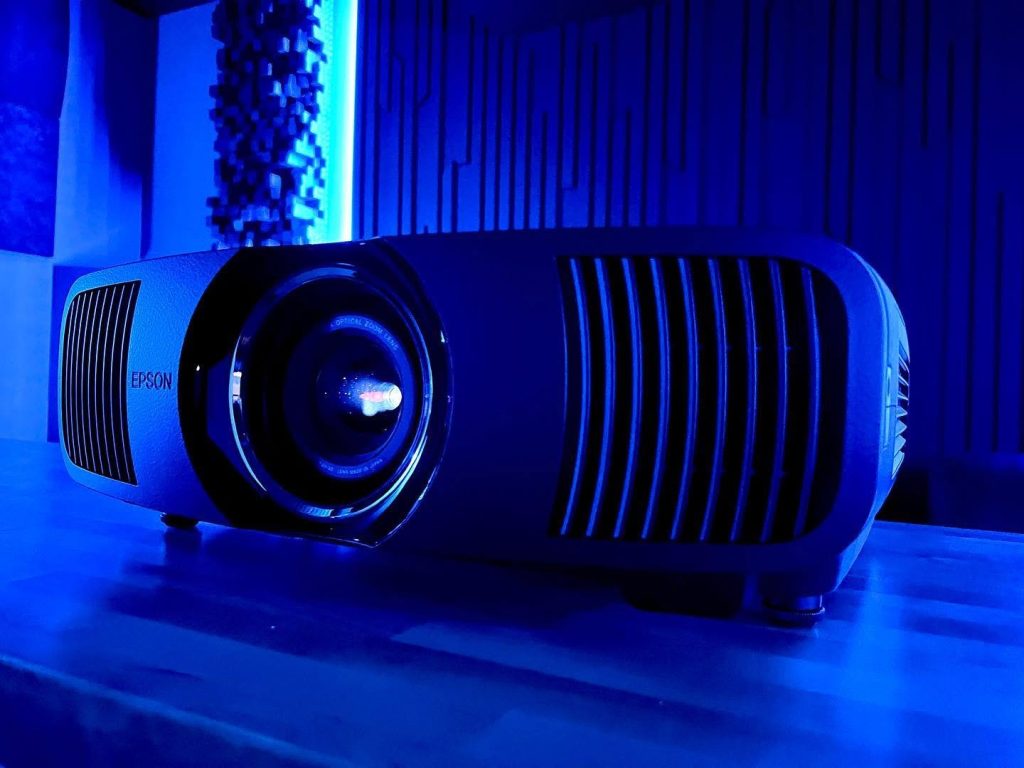


What works indoors does not automatically work outdoors. Indoors, you have control over the light, the projector’s placement, your viewing environment, and much of the audio. Outdoors, you lose all of those benefits. Now, the time of day, the size of your image, projector placement, and even the surrounding area can affect your viewing and listening experience.
That’s precisely why the best projector for outdoor movies isn’t just about having the biggest specifications. You have to factor in what your setup requires. In this guide, we will break down those requirements and use them to highlight the best projector picks for every outdoor movie setup.
What Actually Makes Outdoor Projection Different from Indoor Projection?
Outdoor projection presents many more challenges than indoor projection. Mother Nature is much less cooperative than a controlled room full of easy lighting, acoustics, placement, and power conditions. Once you take the projection outdoors, every variable you thought you had locked down can change by the hour.
Ambient light is usually the biggest obstacle. A movie that seemed crisp, vibrant, and full of detail can take a major hit when daylight fades, or someone turns on a light outside. Lights from the porch, landscape lighting, and string lights can all compete with your projected image. The larger the image, the more work you’re putting on your projector because its light has to cover a larger area on the screen.
The time of day plays a role, too. Bright daylight, dusk, and total darkness all create unique conditions for watching movies. The darker it gets outside, the less ambient light there is for your projector to overcome. This gives contrast, black levels, and color more room to pop. However, during brighter times of the day, having sufficient brightness becomes increasingly important.
Placement is also a concern because you may need your projector to sit farther away from the screen. You may also need it to work around tables, chairs, and other objects. Sound quality also changes outdoors. This is because there are no walls to contain it. Toss in dust, moisture, dew, and other weather conditions, and it’s easy to see how tough outdoor projection can be.
Now that you know what you’re up against, it’s easy to understand which specifications you should look for in an outdoor projector.
What Features Should the Best Outdoor Projector Have?
Now that you have a better understanding of what you’re working with, we can dive into the specifications you should look for in an outdoor projector. Brightness is going to be our first concern. How much brightness you need will depend on how much ambient light you have to work with, how big your screen is, and how long you intend to watch movies. The brighter the projector, the better it will handle some ambient light that you can’t block from outdoors. That being said, even projectors with high brightness ratings will perform best once the sun has gone down or if you can use controlled lighting.
Brightness isn’t everything though. Resolution determines how much detail your image has, and contrast prevents dim scenes from appearing washed out. Color performance is another important spec to consider, as brightness isn’t everything when it comes to natural-looking pictures. Ideally, you want as much brightness as you need for your environment and use case without compromising image quality.
Outdoors, you don’t always have the luxury of mounting your projector to the ceiling exactly where you need it, or of having the ideal distance between your projector and your screen. If that’s the case, optical zoom will allow you to adjust your image to fill your screen from a single, fixed location. Lens shift lets you move an image around without moving your projector. Short-throw projectors can also be helpful if you find yourself limited for space outdoors. Motorized focus can also be helpful if you know you will be fiddling with your projector right before movie time.
If you plan to use your projector for outdoor movies regularly, a laser light source is a strong consideration. Lasers don’t require you to change the bulb out every couple of years as most lamps do. They typically require less maintenance over their lifetime as well.
Finally, input types are worth considering. HDMI, DisplayPort, HDBaseT, and wireless inputs will all make it easier to connect your projector to your media source. They can also make it easier to integrate your projector into larger AV systems, if needed. HDMI ARC or eARC will allow for easier connection to higher-quality audio systems.
One last thing to keep in mind before we dive into our recommendations. Just because you will be using your projector for outdoor movies doesn’t mean it needs to be designed for outdoor use. Unless otherwise stated by the manufacturer, don’t leave your projector out in the elements. Most projectors are not weatherproof and will degrade if exposed to rain, moisture, dew, or dust.
If you plan on taking your projector in and out of outdoor storage after each use, make sure to bring it inside when you’re done. For permanent installations, you will need to make sure your projector is properly protected from the elements. Recommendations below are geared towards projectors used in outdoor entertainment systems. Not necessarily projectors that can be left outside.
The Best Outdoor Movie Projectors for Every Setup
You now know what factors matter when buying projectors for outdoor entertainment. You also know what projector features can help you account for those factors. Let’s connect the dots by looking at the best projector for your specific outdoor setup.
Best for a Casual Nighttime Backyard Setup
For most people, a backyard movie setup is all about hanging out with family or friends and watching movies with a decent-sized picture after the sun goes down. Ambient light won’t be an issue. What you do need is enough lumens to avoid washed-out images, crisp resolution, and lifelike colors that translate well to a big screen.
Epson QB1000
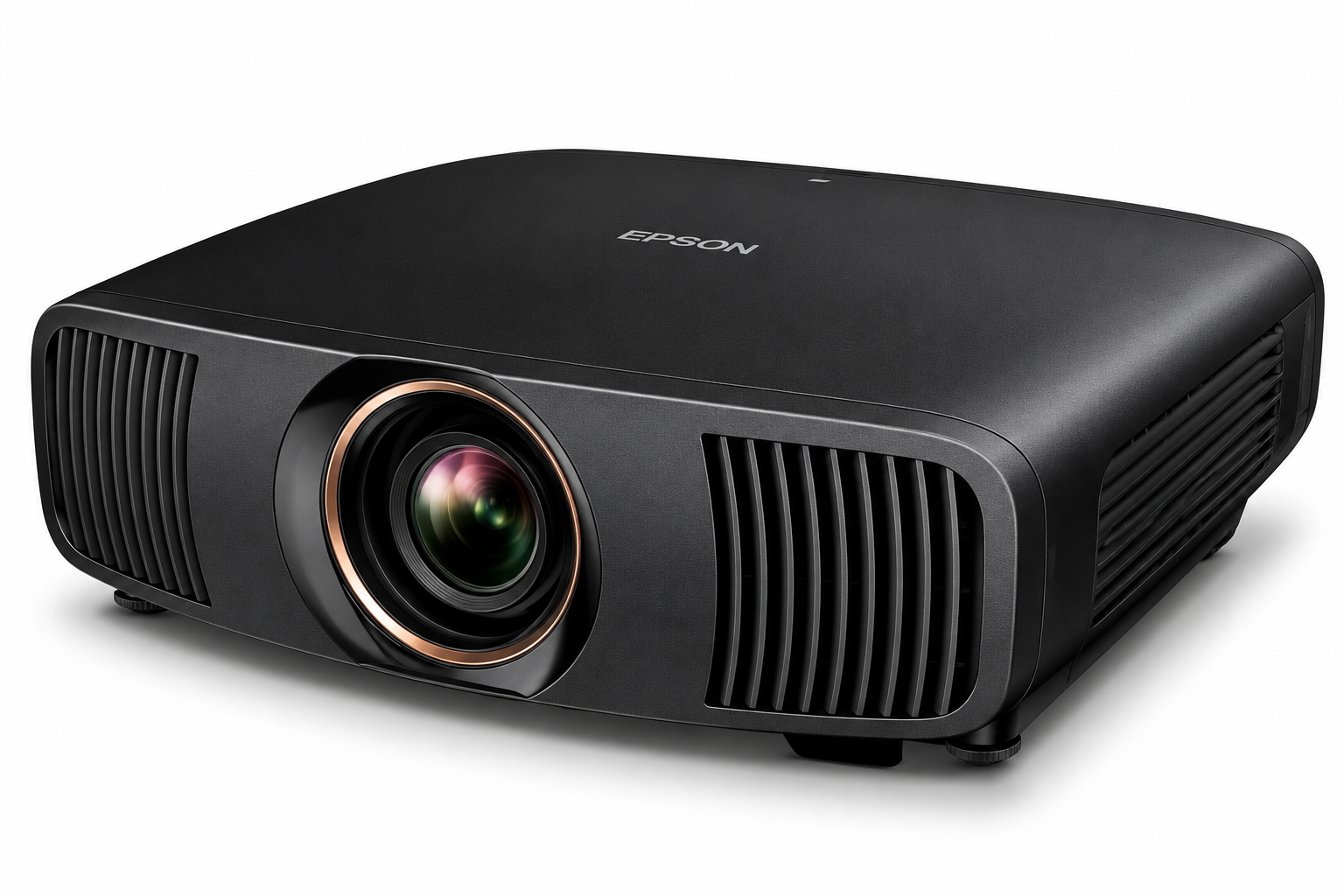
Why we recommend it: The Epson QB1000 checks all the boxes for a straightforward nighttime projector setup. With 4K enhanced HDR, it delivers beautiful fine detail and contrast. Its 3,300 lumens provide plenty of brightness to utilize that resolution without requiring completely overcast conditions. And its 3LCD technology provides natural-looking color that will help the projected image maintain its aesthetic outdoors as well.
The QB1000’s strength is in its balanced performance. Instead of just excelling in one area, it offers a balanced combination of 4K detail, HDR, brightness, and color accuracy. These features deliver a great image night after night in your backyard. The projector’s laser light source, which lasts up to 20,000 hours, is another bonus for the kind of setup you’ll likely use often.
Sony BRAVIA Projector 9
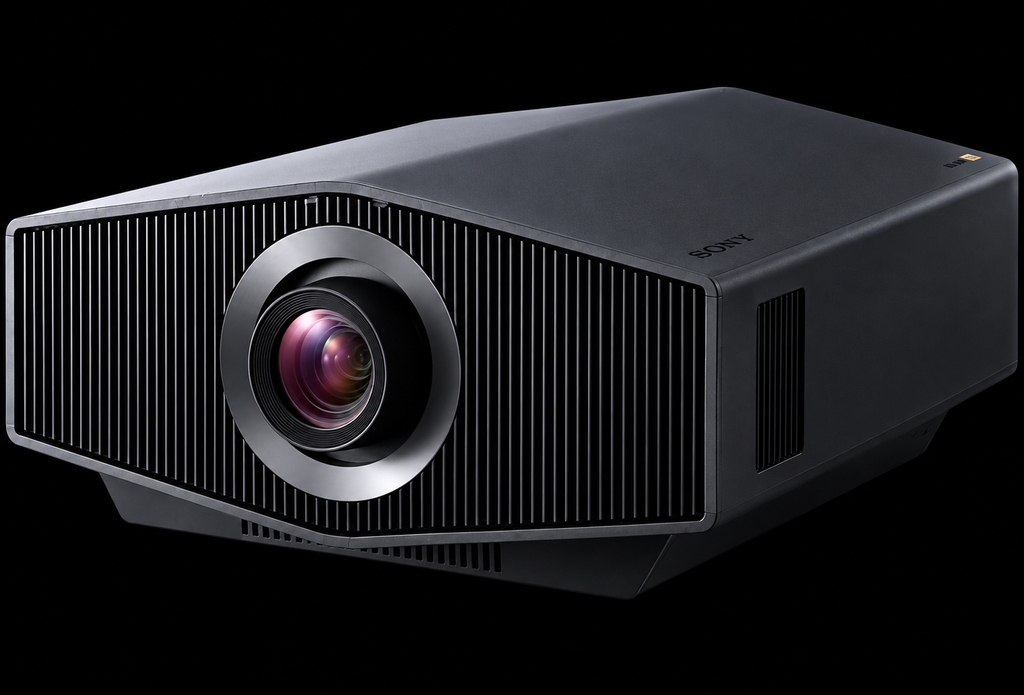
Why we recommend it: Sony BRAVIA Projector 9 is another excellent option for outdoor night viewing, though its edge comes from a slightly different place. It has a native 4K SXRD panel that produces stunningly crisp imagery. Also, its 3,400-lumen laser light source provides enough brightness to project onto a sizable outdoor screen.
Setting it apart from the QB1000 is Sony’s XR Processor. Instead of focusing purely on resolution and brightness, it also calibrates contrast, color, and detail throughout the image. That’s particularly useful for outdoor night viewing when dark scenes and bright highlights stand out more. The result is a crisper image with improved handling of subtle details in both bright and dark areas.
Best for Bright Outdoor Setup
Outdoor spaces can be bright, especially when you begin your movie night before the sun goes down. If you plan to use a projector while there’s still ambient light outside, a brighter model can help maintain a more visible image. However, even the brightest projector will produce its best image after sunset or when you can control the surrounding lighting. These two Epson projectors give you the light output you need to overcome those obstacles, just in slightly different packages.
Epson EB-PQ2008B
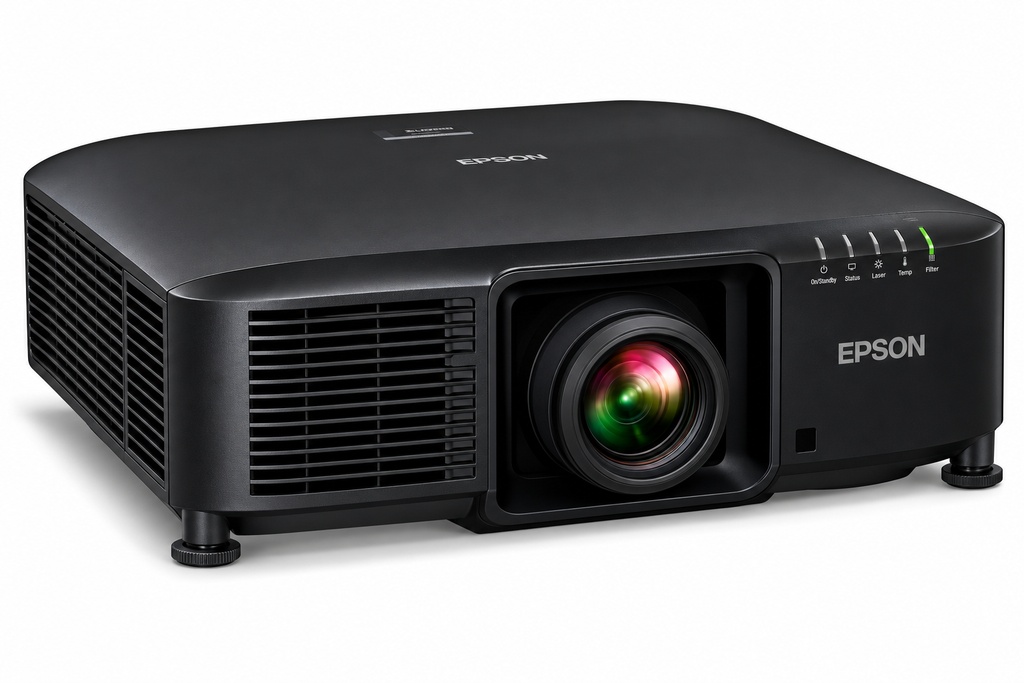
Why we recommend it: If you need brightness, the Epson EB-PQ2008B is an excellent choice. It delivers 8,000 lumens of color and white brightness, creating a large, visible image in outdoor spaces. Plus, it uses 4K resolution with Epson’s 4K Crystal Motion technology, so you won’t sacrifice image detail to get that brightness. With 3LCD technology, colors appear natural, so your image stays vibrant, even in ambient light.
There’s also plenty of versatility when positioning the projector. With vertical and horizontal lens shift, optical zoom, and electronic keystone correction, it is easy to place the projector to suit your outdoor space. You also get a 20,000-hour laser light source, so you won’t have to worry about replacing the lamp too often.
Epson EB-PQ2010B
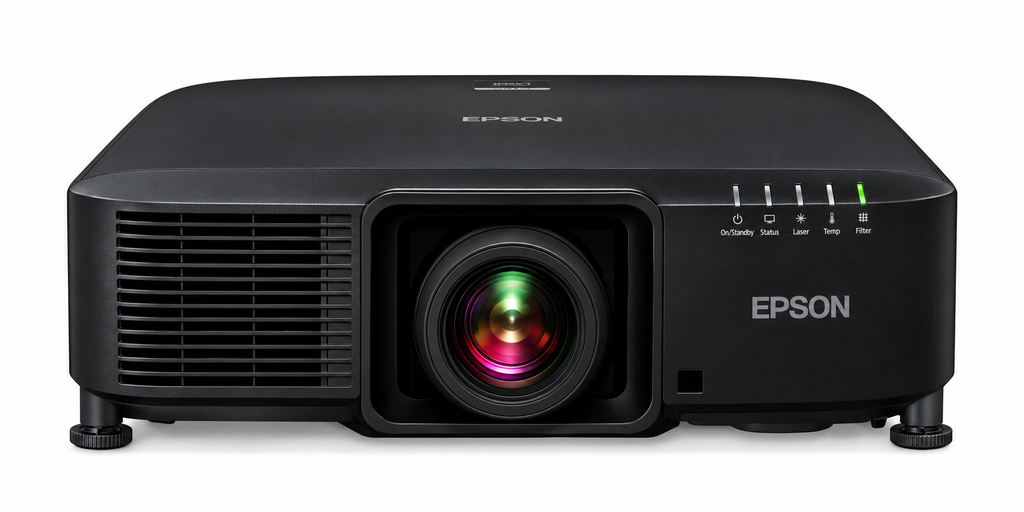
Why we recommend it: While 8,000 lumens is great for bright outdoor scenarios, 10,000 lumens opens up more possibilities. That’s why we recommend the Epson EB-PQ2010B for brighter outdoor presentations. It puts out 10,000 lumens of color and white brightness. This should keep your image visible even in bright ambient light or if you plan to use a larger screen. Its 4K resolution, powered by Epson’s 4K Crystal Motion technology, ensures you don’t lose that level of image detail. Also, the true 3LCD technology reproduces natural-looking color.
You’ll also get lens shift, optical zoom, and horizontal and vertical keystone correction for more versatility with where you place your projector. Its laser light source is rated for 20,000 hours, so you can forget about changing lamps too frequently.
Best For Limited Space Outdoors
Outdoor projectors don’t always leave you plenty of space behind the seating area. You often need several feet between the projector and the wall to get a large image with traditional devices. Chairs may press against the wall, or other objects might prevent you from placing the projector too far away. An ultra-short-throw projectors like the Epson PowerLite 800F can create large images without requiring much distance from the wall.
Epson PowerLite 800F
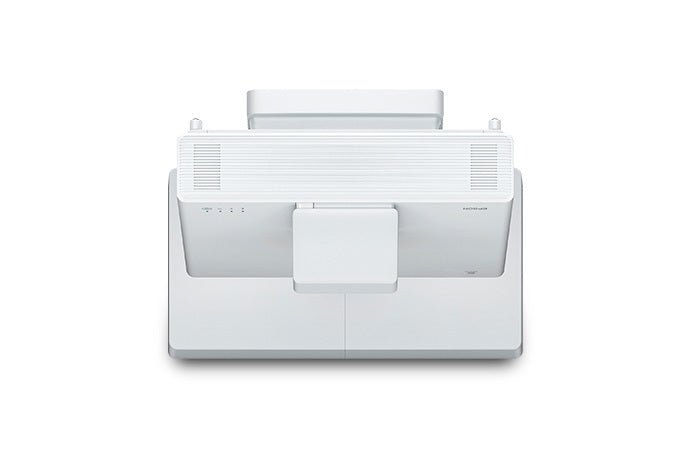
Why we recommend it: When you absolutely need the projector close to the wall due to space constraints, the Epson PowerLite 800F will serve you well. Its ultra-short-throw design lets it produce a large image without requiring the projector to sit several feet behind your seating area. Instead of placing it far behind the audience, you can keep the projector much closer to the wall and preserve more of your outdoor viewing space.
This setup allows for a larger outdoor viewing space without taking up room you’d typically reserve for the projector. The PowerLite 800F can put out up to 5,000 lumens of color and white brightness, which should keep your image visible even if there’s some ambient light. 1080p resolution and 3LCD technology also keep your movies, sports, and more colorful and detailed.
Best Projectors for Permanent Outdoor Entertainment Installations
There are situations where you’re not looking for a casual setup. You want something permanent. You want an outdoor projector setup you can return to again and again without repositioning it. And yes, we’re still talking about projectors. A permanent setup requires dependable operation, precise positioning, flexible installation, and sufficient outdoor performance. These two projectors take decidedly different approaches.
JVC DLA-NZ800
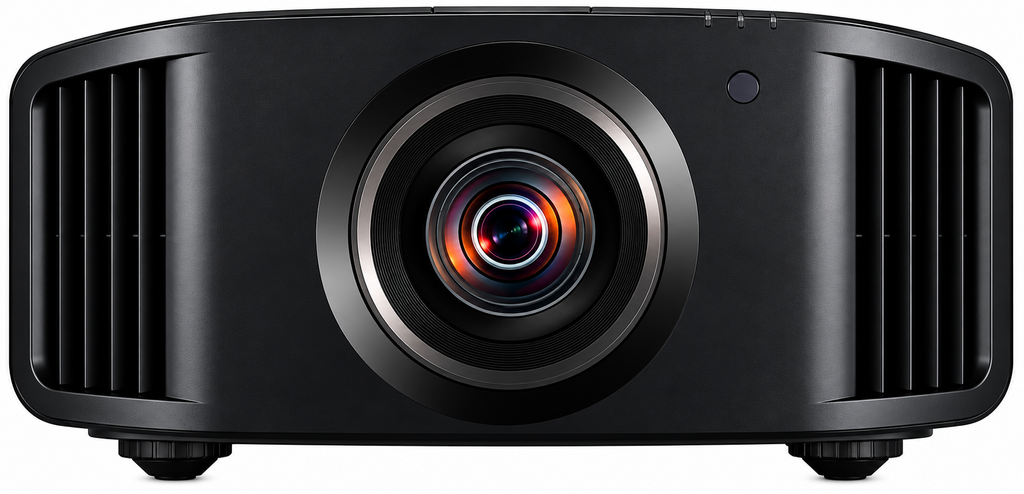
Why we recommend it: If you’re looking for a permanent outdoor projector setup where image quality and control are your top priorities, the JVC DLA-NZ800 checks many of the boxes. Native 4K D-ILA panels produce crisp images, while Gen2 8K e-shiftX ups the refinement on larger screens. A motorized all-glass lens system also provides versatile adjustments without moving the projector itself.
100,000:1 native contrast ratio ensures blacks stay deep and images retain their depth. Frame Adapt HDR and Deep Black Tone Control let you further refine HDR content. Finally, a BLU-Escent laser reduces maintenance with up to 20,000 hours of life. For a permanent outdoor installation, it’s a solid high-end solution.
Epson EB-PQ2010W
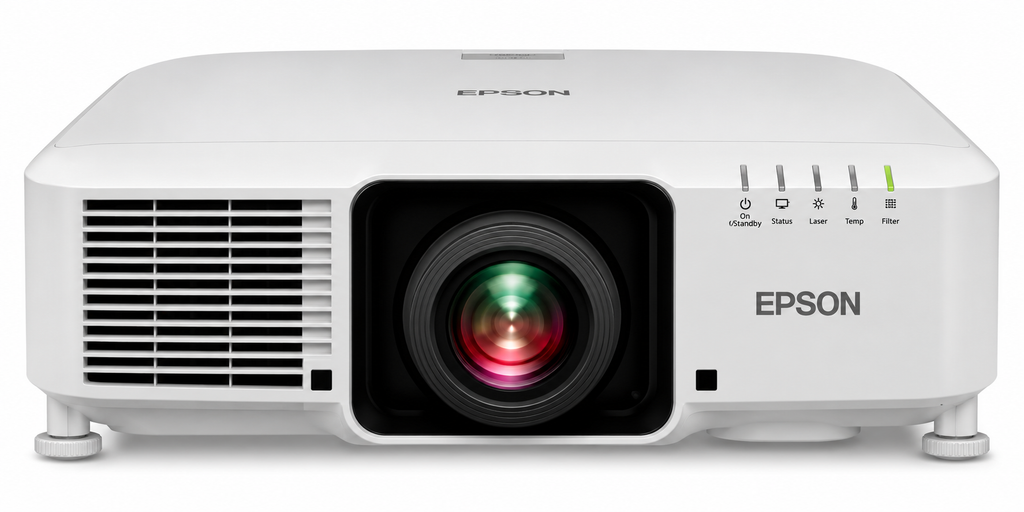
Why we recommend it: The Epson EB-PQ2010W is our pick for a different reason. Instead of prioritizing contrast and finesse like the JVC, the Epson prioritizes brightness and installation options. A powerful 10,000-lumen brightness means this projector works well on large screens and can handle environments where you might not be able to eliminate all ambient light. Its 4K resolution using Epson’s 4K Crystal Motion technology and 3LCD technology also keep images crisp and colorful.
Lens shift, zoom, and correction features help position the projector without struggle. HDMI and DisplayPort inputs also help with connecting to your other equipment. Couple that with a 20,000-hour laser, and the Epson EB-PQ2010W is ideal if brightness and setup are your primary concerns.
Best Premium Outdoor Cinema
Outdoor entertainment is rarely simple. Premium outdoor cinemas require crisp contrast, refined detail, accurate HDR, vibrant color, and ample brightness to deliver a convincing picture on an oversized screen after dark. These two premium JVC projectors provide those attributes, albeit in different ways.
JVC DLA- RS4200
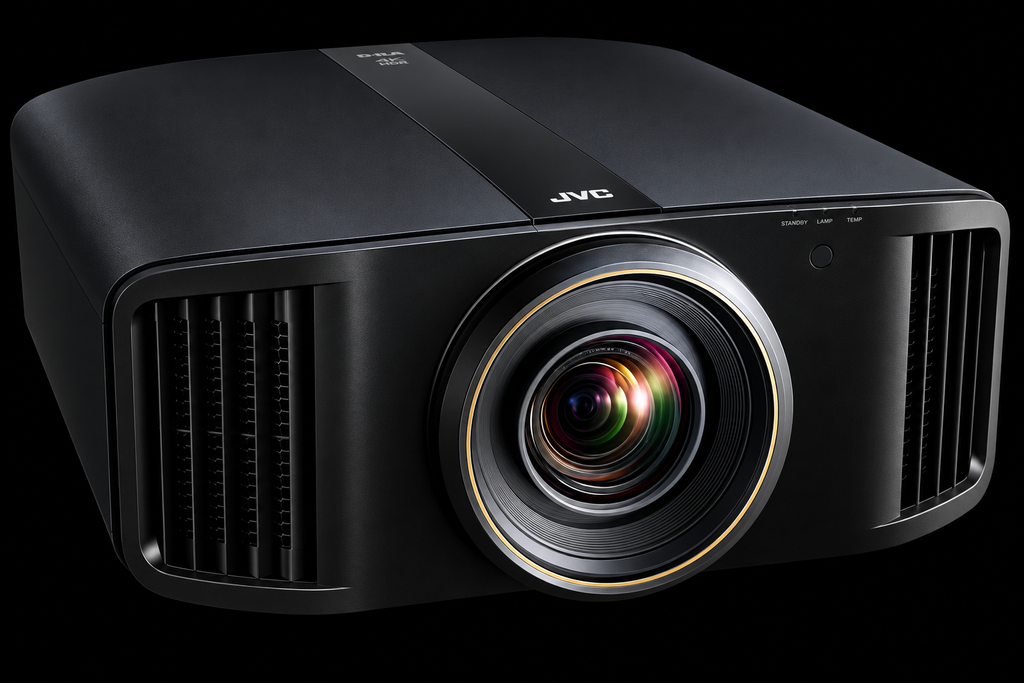
Why we recommend it: Leading off this premium outdoor cinema projector lineup is the JVC DLA- RS4 200. A 3,300-lumen BLU-Escent laser projector bulb delivers the brightness needed for a vivid image on an oversized outdoor display once the sun goes down. Native contrast of 150,000:1 helps deliver richer blacks while maintaining shadow detail, so dark scenes retain dimension rather than appearing flat or washed out.
RS4 200 stands out with its image refinement capabilities. Gen2 8K e-shiftX technology teams with its 4K imaging to boost fine detail so textures and small image elements don’t fall apart when displayed on a large screen. Frame Adapt HDR Gen2 also optimizes HDR presentation on a scene-by-scene basis to keep bright highlights and darker areas in balance. A fully motorized lens gives you precise focus, zoom, and lens shift controls so you can fine-tune your screen’s alignment.
JVC DLA-NZ900
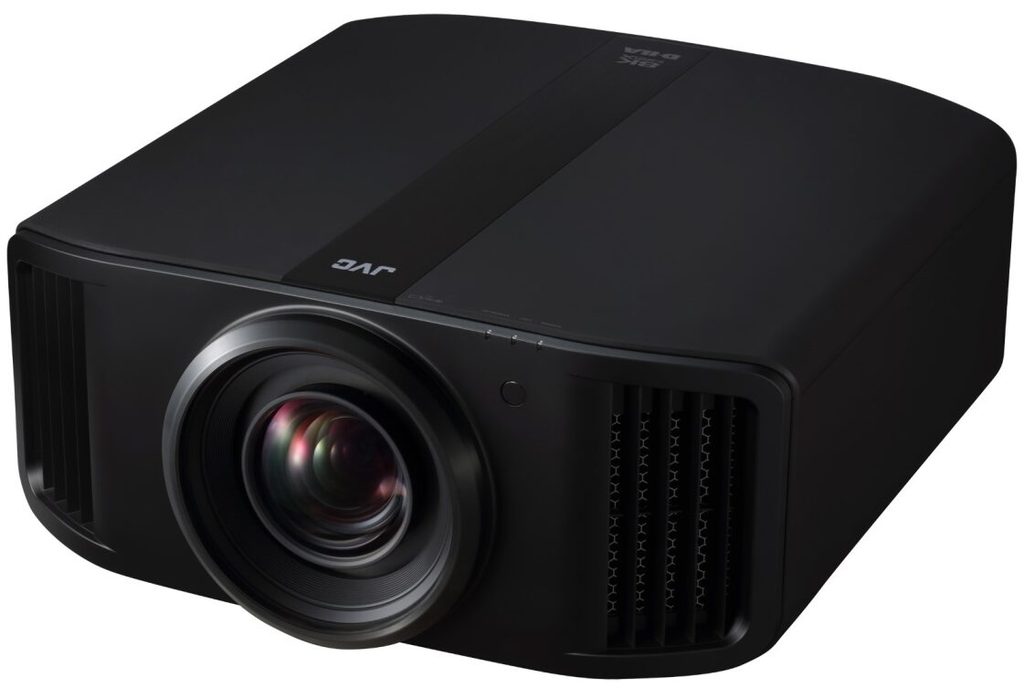
Why we recommend it: JVC’s DLA-NZ900 takes a different approach, with native 4K and large-screen performance in mind. Native 4K D-ILA panels deliver detailed imagery while Gen2 8K e-shiftX technology ups the ante on texture and image refinement. Couple those features with 3,300 lumens of laser brightness and a native contrast ratio of 150,000: 1 and you have the perfect recipe for large screen image size and contrast for convincing nighttime performance.
NZ900 even offers versatile features for various forms of outdoor entertainment. Frame Adapt HDR technology, HDR10, HDR10+, and HLG compatibility allow it to read and display a wide variety of HDR content while keeping it looking its best. A motorized all-glass lens will also keep your image sharp no matter the size of your display. Dual 48Gbps HDMI 2.1 inputs and support for 4K/120p gaming also allow this projector to shine as a premium outdoor gaming machine and a movie-night powerhouse.
Conclusion
Hopefully you now understand why simply bringing an indoor projector outdoors isn’t always the solution. Indoors, you already have the walls and ceiling around you. Indoors, you have controlled lighting and room acoustics. Move outdoors, and many of these benefits are gone. Ambient lighting, oversized displays, open spaces, weather elements, placement limitations, and audio are just some of the factors that can work against you.
That’s why there isn’t one best projector for outdoor movies. The ideal projector for outdoor movies depends on your setup. Maybe you need more brightness. Maybe your space requires higher contrast, HDR, better resolution, or a more flexible installation option.
If we didn’t cover your setup above, or you’re still on the fence about which projector will work best for you, why not speak to someone? Set up a consultation with the Dreamedia team, and we’ll help you pair the perfect projector to your space, screen size, projector placement, viewing conditions, and entire outdoor entertainment system.
FAQ
What should I look for in an outdoor movie projector?
Brightness, contrast ratio, resolution, screen size and placement, and weatherproofing. When showing movies outdoors, you have less control of ambient light than indoors. Make sure your projector is up to the task of your environment and expectations.
How many lumens do I need to project outside?
There’s not one magic number. A 2,000 to 3,000 lumen projector can work well for a smaller screen in very dark conditions. As your screen gets larger or more ambient light enters the picture, you may need significantly more brightness to maintain a clear, vibrant image.
Can I use any projector outdoors?
Yes, but don’t let it get wet. Unless it’s advertised as weatherproof, your projector will have trouble with rain, excess moisture, and high humidity. While many people use projectors outside, do not leave them exposed to the elements. Bring them inside when you’re done watching movies.
Is a 4K projector good for outdoor movies?
Yes, but whether 4K makes a noticeable difference depends on your screen size, seating distance, source quality, and viewing conditions. A larger screen and closer seating position can make the additional detail easier to appreciate, while the quality of your source and the overall viewing environment also affect what you see.
Are projector built-in speakers good enough for outdoors?
Built-in speakers are fine for a small group in a relatively quiet backyard. If you’re hosting your own outdoor cinema, consider hooking your projector up to some external speakers.