Can you get real cinema bass in a home with shared walls? Yes, if you pick the right system and set it up with care. When you shop for the best soundbar with subwoofer here, power is only one part of the equation. Subwoofer placement, calibration, and volume control can matter just as much as the sub’s size or output. In this article, we’ll explain how bass moves around a home and which features help you control it. We’ll also cover three configurations, sub placement, isolation feet, and when your room may need an upgrade.
What Makes the Best Soundbar With Subwoofer for Shared Walls?

In homes with shared walls, the best soundbar with subwoofer gives you the most control over bass. Bass behaves differently from every other sound in a movie. Low frequencies are especially hard to isolate. They can travel through walls, floors, and ceilings, and subwoofer vibrations can also move into the building’s structure. That’s why your neighbors may hear or feel the bass even when they can’t make out the dialogue.
Here’s the good news: a few features can put you back in control. These features often matter as much as watts or channel counts. First, look for a soundbar with an adjustable subwoofer level. Start with the manufacturer’s recommended setting. Then play a familiar movie scene or song and adjust the level a little at a time. Aim for bass that supports the soundtrack without overpowering dialogue or creating unnecessary vibration.
A night mode is the next step. Sonos calls its version Night Sound. It narrows the gap between loud and quiet moments, so dialogue stays clear without raising the overall volume. Explosions come down, whispers come up, and the remote can stay on the coffee table. That makes it handy for late-night viewing. However, it can’t stop bass from traveling through the building.
Dialogue enhancement takes care of the other reason people turn up the volume late at night. It makes speech easier to follow without raising the whole system’s volume. Room correction, such as Sonos Trueplay or Audyssey on compatible receivers, can also improve bass response at your seat. If you move the subwoofer or change your seating a lot, run the calibration again.
Three Ways to Pair a Soundbar With a Subwoofer
Most soundbar and subwoofer systems fall into three groups. You can choose a matched bundle, an expandable wireless ecosystem, or a passive soundbar with an AV receiver. Each one balances convenience, flexibility, and bass management in a different way. The right choice depends on your space and how much you want to upgrade later.
A bundle is the easiest option. The Denon DHT-S517 is a good example. It pairs a soundbar with a matched wireless subwoofer. Denon built the two parts to work as a pair, not as an open system for third-party subs. Many bundles also include night and dialogue modes for late-night viewing. Check the features on the model you’re considering.
If you want room to grow, an ecosystem might fit better. Sonos lets you expand your system over time. Start with a compatible soundbar, then add a Sub for deeper bass. Later, you can add matching rear speakers for a more immersive surround experience. Your exact upgrade options depend on the soundbar and Sub models you choose. In return, you’ll usually stay with one brand for every piece.
For the most control, pair a passive soundbar with an AV receiver. This setup gives you more flexibility than most soundbar packages. Depending on the receiver, you can adjust crossover settings, speaker levels, bass management, and subwoofer output. Some receivers also support multiple subwoofers and more advanced calibration. You can check our Passive Soundbar page for options.
Passive Soundbars for a Receiver System
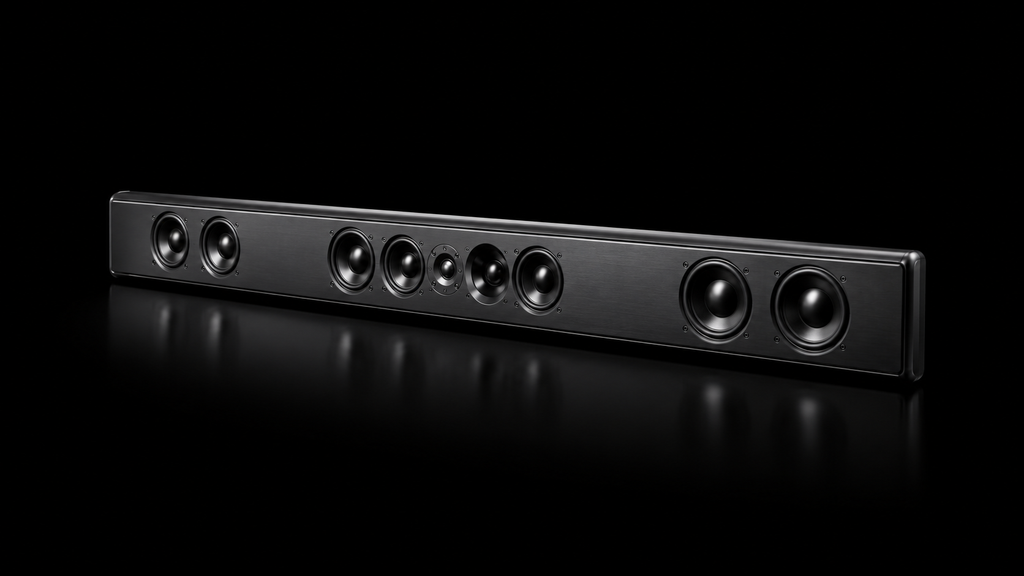
Installers often choose this setup when a room needs more bass control. A passive soundbar combines the left, center, and right speakers in one slim enclosure. It has no built-in amplifier. Instead, your receiver powers the soundbar and runs the subwoofer. That opens up adjustments a standard soundbar can’t offer. Dreamedia lists several passive soundbars built for this kind of system.
The Definitive Technology Mythos uses 3.5 inch XTDD drivers and three 1 inch aluminum oxide dome tweeters. The 75 and 85 inch versions also add two 3.5 inch XTDD midrange drivers. Definitive Technology lists the enclosure at less than 2 inches deep. It also carries an IP66 rating, so it suits covered outdoor areas as well as indoor rooms. Definitive Technology recommends 80 watts of amplifier power. It lists the frequency response as 120 Hz to 20 kHz (−3 dB). The Mythos comes in three widths for 65, 75, and 85 inch class TVs.
The RBH Sound Signature 64-SB pairs four 6.5 inch aluminum cone midwoofers with three 1 inch fabric dome tweeters. RBH lists its frequency response at 60 Hz to 20 kHz ±3 dB. It comes in 57, 66, and 75 inch widths, and RBH also offers custom lengths.
If you have a smaller room, the Proficient LSB3 Protege is about 40 inches wide. Proficient’s spec sheet lists six 3 inch graphite woofers and three 1 inch silk dome tweeters. It also lists 60 watts per channel of power handling and a frequency response of 140 Hz to 20 kHz. Pair it with a subwoofer to handle the lower frequencies.
The Receiver and Subwoofer Behind a Passive Bar
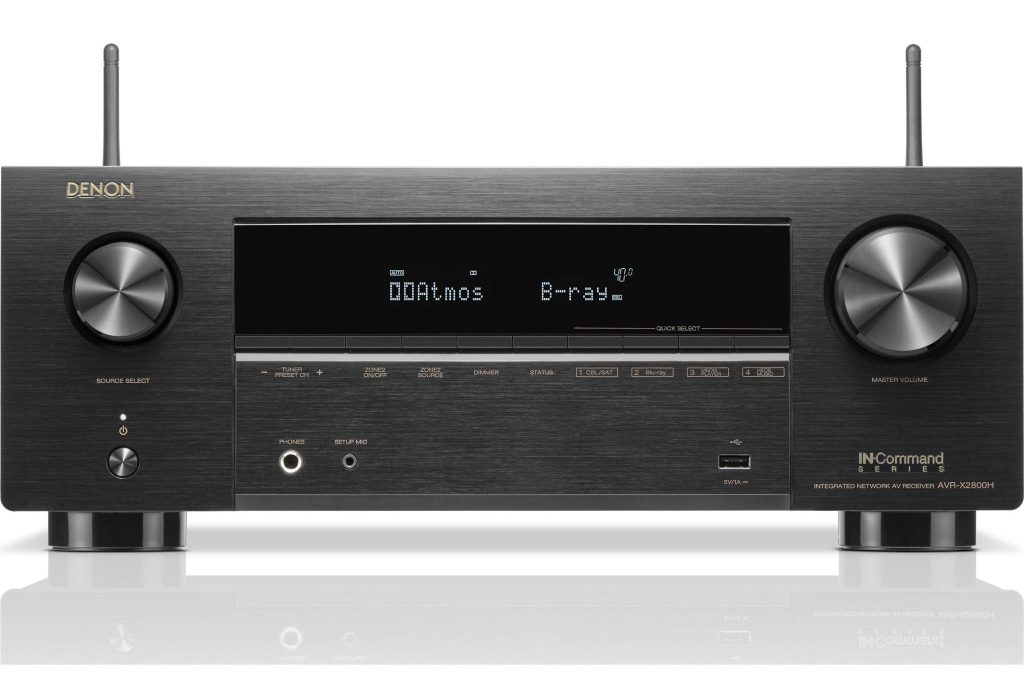
The receiver controls everything in this setup. The Denon AVR-X2800H is a 7.2 channel AV receiver with seven powered amplifier channels and two subwoofer outputs. Denon rates it at 95 watts per channel at 8 ohms, under its specified two channel test conditions. It also includes Audyssey MultEQ XT room correction. The two subwoofer outputs let you connect two powered subs. However, don’t confuse them with two independently calibrated subwoofer channels.
For the subwoofer, the SVS 3000 Micro R|Evolution suits rooms where a full size sub is hard to fit. It’s a compact sealed subwoofer with two opposing drivers. That opposing driver design helps manage cabinet vibration. The SVS app also gives you easy control over supported settings and adjustments.
For a larger room, consider the sealed SVS SB-3000 R|Evolution. SVS lists a front firing 13 inch driver and a frequency response of 17 Hz to 230 Hz (±3 dB). For more subwoofer options by room type, see The Subwoofers That Stand Out in 2026.
Where Should You Place a Soundbar Subwoofer to Keep Bass in the Room?
If your room allows it, start by testing spots that aren’t right against a shared wall or floor. Don’t assume one position will always work best. A corner can boost bass output, and moving the sub changes how room modes affect your seat. Try a few locations, and choose the one with the smoothest bass at a comfortable level. A quick “sub crawl” makes this easier:
- Place your subwoofer on or next to your primary seating position.
- Play some music with a consistent deep bass sound or listen to a scene from a movie.
- Crawl around the floor where you think your subwoofer may go and keep your head at subwoofer height.
- Place your subwoofer in the location where the bass feels smoothest and most consistent.
It sounds silly, but it can help a lot. Bass can sound boomy in one part of the room and thin in another. Once you find a smoother spot, you may be able to lower the sub level and still enjoy the impact.
This is why some home theaters use two subs. Take SVS’s Dual SB-4000 system, for example. SVS says each SB-4000 has a 13.5 inch driver and a 1,200 watt RMS amplifier in a sealed enclosure. Two properly placed and calibrated subs can help deliver more consistent bass across several seats. They may also add output headroom, so neither sub has to work as hard. However, two subs won’t automatically reduce the bass that reaches your neighbors.
Do Subwoofer Isolation Pads Stop Bass From Reaching Neighbors?
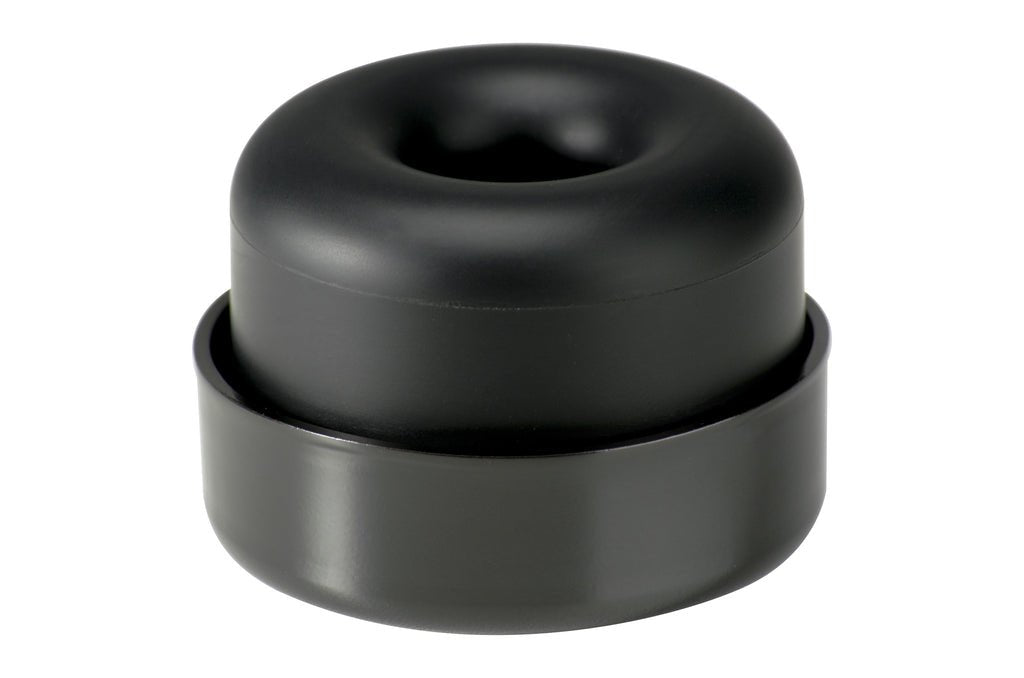
Isolation feet can reduce some of the mechanical vibration a subwoofer sends into the floor. However, they can’t remove all the vibration that travels through the structure. They also can’t stop airborne bass from moving through walls, floors, and ceilings. So they solve one part of the problem, which still makes them worth considering.
The SVS SoundPath Subwoofer Isolation System swaps a subwoofer’s stock feet for elastomer feet inside steel shells. SVS says it works with any subwoofer brand that accepts screw-in feet. It comes in four and six foot packs, with hardware in three common thread sizes. Check your subwoofer’s thread size before you order.
SVS designed SoundPath to reduce the mechanical vibration that moves from the subwoofer into the floor. It can help with some floor vibrations and rattles. However, it doesn’t replace proper sound isolation, and low frequency sound can still travel through the building. So pair the feet with careful placement and sensible sub levels.
Your floor type can play a part too. Hard floors can make some rattles and contact noises more noticeable, depending on the room and sub placement. A rug may help with minor surface noise, but it won’t stop deep bass from traveling through the floor. For mechanical vibration, a properly fitted isolation system is the more useful option.
When to Move Beyond a Soundbar With Subwoofer
Building a dedicated home theater? If you want strong bass without disturbing the rest of the house, plan sound isolation from the start. That may include decoupled wall and ceiling assemblies and properly sealed doors. Windows, ventilation, and other sound paths need attention too. In the end, the complete room design matters more than any single upgrade.
Handling these details during construction usually costs less than adding them later. Hire qualified professionals for structural and electrical work. Check with your local building department to see which permits you may need. Room treatment can help with reflections and bass buildup. Sound isolation and room treatment work together, but each one does a different job.
That’s the thinking behind a dedicated home theater room and our CineLuxe room design. CineLuxe can help plan acoustic treatment as part of the room’s design, while isolation needs its own plan. Done well, the sub can play louder while less sound reaches the rest of the house.
Conclusion
The best soundbar with subwoofer lets you enjoy impactful movie sound while keeping the bass under control. Sub placement, level adjustment, and listening modes can make a real difference, especially in homes with shared walls.
Choose a system with sub level control, night mode, and dialogue enhancement. Try a few sub locations before you settle on one. If your floor carries vibration, isolation feet can help. These small steps can keep more bass in your room and less in your neighbor’s.
If you aren’t sure what setup will work best with your space, schedule a consultation with us, and we’ll help you map it out.
FAQ
Is a Soundbar With a Subwoofer Worth It?
Yes, if you watch a lot of movies. Most smaller soundbars struggle to produce the lowest bass notes. A subwoofer adds depth to explosions, music scores, car engines, and more. If you live in a small apartment, look for a system with a good night mode and sub level control.
Can You Add Any Subwoofer to a Soundbar?
No, unless the soundbar has a subwoofer output jack or is compatible with that manufacturer’s proprietary wireless subwoofer. Some soundbars, like those from Sonos, can only be paired with the same brand of subwoofer. However, if you use a receiver with a passive soundbar, you can connect to most powered subwoofers with a line-level input.
Is a Wireless Subwoofer as Good as a Wired One?
It can be. A good wireless subwoofer can perform well, and it’s much easier to place. You’ll still need a power outlet nearby. Wireless connections can drop out if the sub sits too far away or picks up interference. Keep the sub in the same room as your soundbar, and check the manufacturer’s range guidance.
Can a Soundbar With Subwoofer Replace a Full Surround System?
A soundbar with a subwoofer can be an excellent alternative to a traditional surround system when simplicity and convenience come first. Models with dedicated rear speakers can create a more immersive experience. However, a properly set up surround system gives you more flexibility in speaker placement and coverage.
Does Dolby Atmos Need a Subwoofer?
No. Dolby Atmos doesn’t need a separate subwoofer to work. Atmos is an object based audio format that adds 3D sound, including height effects. However, many Atmos soundtracks carry deep low frequency effects. A subwoofer helps reproduce those sounds with more impact. Without one, your other speakers have to handle the bass.