Upgrading projector screens in 2026 is not about picking the model with the biggest numbers or the newest release. Better specs don’t guarantee a better image, and that’s where most setups fall short.
At Dreamedia, we see the same pattern over and over. Someone installs the exact gear they saw online or heard in another room, but it doesn’t feel the same in their home. The image looks flatter, details don’t stand out the same way, and the overall experience feels slightly off.
The difference usually comes down to one thing. The projector screens. It’s the one piece that controls how the image actually looks once the projector hits it, and it’s the most overlooked piece in the entire setup.
In this guide, we break down what makes a projector screen worth upgrading, the types that exist, and how to choose one that actually fits your room.
What is a Projector Screen (And Why It Matters More Than You Think)
A projector screen isn’t just a white surface on a wall. It’s a controlled material designed to manage light in a very specific way. It reflects the image back to you, but not randomly. It shapes brightness, contrast, and even how colors hold together across the entire image.
Projector screens are often treated like a simple add-on, so decisions get made around size, brand, or price instead of performance. In reality, it comes down to a few specific factors. These are what determine how a screen handles light, how consistent the image looks, and whether it actually works in your room:
Light Behavior (Surface)
This is the foundation. A proper screen reflects light evenly across the entire surface. A wall does not. Most walls tend to absorbs light completely in some areas and reflects too much light in others. This action results in dull spots and glare. That uneven reflection is what makes an image feel inconsistent. A controlled surface fixes that and gives you a clean, stable picture.
Gain (Brightness)
Gain is not solely about brightness; it is about control of how much light is reflected back at you. In a bright room, people crank up gain expecting a stronger image. However, higher gain comes with its own set of problems, as they create hotspots and uneven brightness. Lower gain spreads light more evenly, which improves balance. This is where people make mistakes with projector screens. They chase brightest screen instead of matching the screen to the
Contrast (Black Levels)
Contrast is what gives depth to the image. Without it, everything looks flat. The screen plays a role by controlling how light is reflected or absorbed. In rooms with ambient light, the right surface helps preserve darker tones instead of letting them wash out. That’s what makes movies feel layered instead of flat.
Surface Texture (Detail Clarity)
With modern projectors, detail matters more than ever. A rough surface breaks up fine detail and softens the image. A smooth surface keeps everything sharp. If the screen cannot hold detail properly, you are not seeing the full capability of your projector.
Viewing Angle (Seating Experience)
Not every seat is centered. In rooms with multiple seats, the screen needs to maintain brightness and color even off to the side. If it doesn’t, the image drops off quickly. This becomes more noticeable depending on how your seating and furniture are arranged.
Types of Projector Screens
Once you understand how projector screens affects image quality, the next step is simple. You need to know the different types of screens and what each one is actually built for.
Fixed Frame Screens
A fixed frame screen is a projector screen that is permanently mounted to the wall, stretched tightly across a rigid frame so the surface stays perfectly flat at all times. That flat surface is what gives you a clean, consistent image. There are no wrinkles, no waves, and no movement. What your projector sends out is exactly what you see.
Motorized / Retractable Screens
A motorized or retractable screen is designed to roll up into a housing when not in use and drop down when needed, usually with a remote or wall control. Instead of leaving a screen on your wall full-time, it disappears when you’re done watching. That makes it ideal for rooms that serve more than one purpose. However, don’t expect the perfect tension you see in fixed frames, because of the screen roll up feature that is common with motorized projector screens.
Portable Screens
A portable screen is a lightweight, movable screen that can be folded, packed, or set up temporarily when needed. You’ll see these used for outdoor setups, presentations, or casual setups where the screen isn’t permanent.
ALR (Ambient Light Rejecting) Screens
An ALR screen is designed with a special surface that reflects light from the projector toward you while rejecting light coming from the room, like windows or ceiling lights. In a normal screen, room light washes out the image. With ALR, that extra light is reduced, so contrast and black levels hold up even when the room isn’t completely dark.
UST (Ultra Short Throw) Screens
A UST screen is specifically designed for ultra short throw projectors, which sit very close to the wall and project the image upward at a steep angle. Because of that angle, a regular screen will reflect the light incorrectly and distort the image. UST screens use a layered surface structure that directs that steep light path back toward the viewer.
Now you understand the types. The next step is choosing what fits your room. In the next section, we break down the screen categories based on real setups, so you can match the right screen to how your space actually works.
Best Screen for Fully Dark Home Theaters
Dark theaters have a light problem. Any screen that has to be here should be able to reflect light properly. And these are the screens that excel in this feature without using artificial brightness to cut and paste the solution.
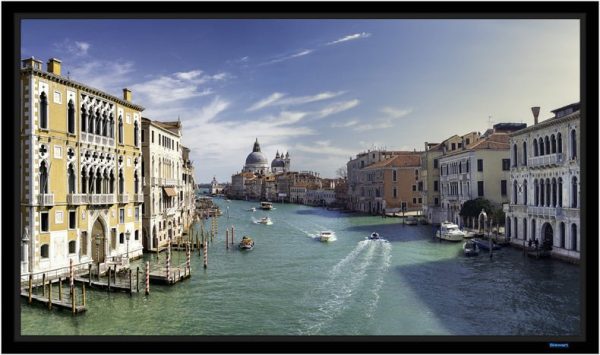
Stewart Filmscreen WallScreen 2.5 16:9 (HD) Fixed-Frame Projector Screen
Key Features
| Spec | Detail |
| Type | Fixed frame, wall-mounted |
| Aspect Ratios | 16:9, 16:10, 2.35:1, 2.40:1 |
| Materials | StudioTek 100, StudioTek 130 G4, FireHawk G5 |
| Gain | 1.0 – 1.3 |
Why It Works Here
The Stewart Filmscreen WallScreen fixed frame keeps the screen perfectly taut. This action allows light to spread evenly from centre to edge. This prevents dull patches or bright hotspots from forming. You will only appreciate the difference in a dark room, because uneven light has no room to hide.
Another great feature of this screen, is its material choice that gives you flexibility. A neutral surface keeps colors accurate. While a slightly higher gain adds brightness without that giving your image that harsh, artificial look.
Pros/Cons
| Pros | Cons |
| Even light distribution keeps the image consistent from edge to edge | Permanent installation requires planning |
| Multiple material options help match brightness and contrast to your projector | Always visible on the wall |
| Frame absorbs stray light, so edges stay clean and focused | Not ideal for multi-use spaces |
| Stable surface keeps fine details sharp in dark scenes |
Stewart Filmscreen StudioTek 130 G4 Wallscreen Deluxe
Key Features
| Spec | Detail |
| Gain | 1.3 |
| Resolution | Supports up to 16K+ |
| Certifications | THX, ISF |
Why It Works Here
Unlike the Stewart Filmscreen WallScreen, that prioritizes color accuracy, the Stewart Filmscreen StudioTek primary focus is precision. Its ultra-refined surface preserves fine details with clarity that can’t be matched.
The 1.3 gain gives a small lift in brightness, which allows highlights to stand out cleanly without spilling over into darker areas. The color accuracy is another standout feature. Everything from skin tones to contrast looks natural from scene to scene.
Pros/Cons
| Pros | Cons |
| Strong detail clarity, so textures stay sharp instead of softening | Higher cost compared to entry-level screens |
| Balanced brightness keeps highlights clear without washing out darker areas | Best suited for fully dark rooms |
| Accurate color reproduction keeps tones natural across scenes | |
| Consistent performance in controlled lighting environments |
Best Screen for Bright Living Rooms (ALR)
Bright rooms have a different problem from dark room. Here the presence of too much light is the problem. An ALR (Ambient Light Rejecting) screen fixes this by controlling how light is reflected. These are the screens used when you want a clear, watchable image even though you are in a bright location.
Screen Innovations Zero Edge Black Diamond
Key Features
| Spec | Detail |
| ALR Capability | Up to 35% ambient light reflection control |
| Gain Options | 0.8, 1.4, 2.7 |
| Viewing Angle | 70° |
| Design | Zero-edge, ultra-thin bezel |
Why It Works Here
The Screen Innovations Zero Edge Black Diamond tackles one main problem: room light. It removes this light limitation by redirecting it away, so the picture keeps its depth and color even during the day.
Another great feature is the wide viewing angle. This allows multiple seats to see the image clearly. Also, the thin frame keeps your room clean, which matters in a living room where your screen is always visible.
Pros/Cons
| Pros | Cons |
| Handles ambient light well, so the image stays clear even with lights on | Premium pricing compared to standard screens |
| Maintains strong contrast and color, so bright and dark scenes stay defined | Viewing angle is more limited than matte white screens |
| Multiple gain options let you match brightness to your room conditions | Requires proper setup to get the best performance |
| Thin bezel design keeps the screen visually clean in a living space | |
| Wide enough viewing cone for most seating layouts |
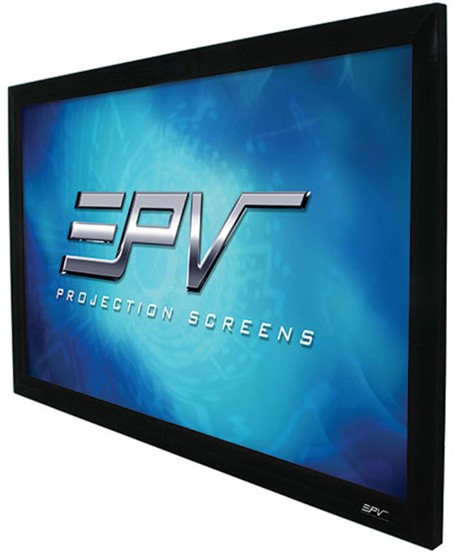
EPV Polar Star SE ALR Projector Screen
Key Features
| Spec | Detail |
| ALR Performance | Up to 85% ambient light filtering |
| Gain | 1.3 |
| Viewing Angle | 70° |
| Certification | ISF |
Why It Works Here
The EPV Polar Star SE ALR screen focuses on maintaining contrast in real-world lighting. The high-contrast grey surface helps keep darker areas from turning flat, while the ALR structure reduces the effect of overhead and side lighting. That combination keeps the image balanced, so bright scenes stay clear and darker scenes still hold detail.
The 1.3 gain adds enough brightness to keep the image visible in daylight without making it look uneven. With ISF certification, colors stay accurate, which is noticeable in skin tones and natural scenes. It is built for spaces where lights stay on and the screen still needs to perform.
Pros/Cons
| Pros | Cons |
| Strong ambient light rejection keeps the image visible even with lights on | More expensive than standard white screens |
| High-contrast grey surface keeps dark areas from turning grey | Viewing angle is narrower than basic matte screens |
| 1.3 gain adds brightness without making the image look uneven | Works best when paired with the right projector brightness |
| ISF-certified color keeps skin tones and colors accurate | Fixed frame means it stays visible on the wall |
| Wide size range (92”–200”) fits different room setups | |
| Easy installation with tension system keeps the surface flat |
Best All-Around Screen for Real Homes (Balanced Use)
A balanced room sits in the middle. It is not fully dark, but it is not flooded with light either. These are the screens built to handle everyday use without forcing you to constantly adjust your room.
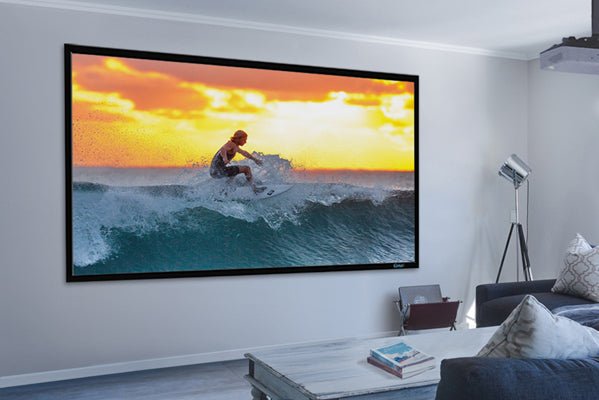
Stewart Filmscreen Cima FF 16:9 (HD) Fixed-Frame Projector Screen
Key Features
| Spec | Detail |
| Type | Fixed frame |
| Surfaces | Neve (neutral), Tiburon G4 (ambient light support) |
| Frame | Aluminium with snap-tension system |
| Options | Perforated version for speaker placement |
Why It Works Here
This Stewart Filmscreen Cima FF 16:9 (HD) Fixed-Frame Projector screen adapts to how real rooms behave. The Neve surface keeps colors accurate when the room is dim, while Tiburon G4 helps maintain contrast when there is some ambient light. That balance means the image stays usable throughout the day instead of only looking right under one condition.
The tension system keeps the surface smooth, so the image does not shift or soften across the screen. Optional perforation also allows speakers to sit behind the screen, which keeps sound aligned with the image and makes the setup feel more natural without changing the room layout.
Pros/Cons
| Pros | Cons |
| Keeps the surface tight and flat, so the image stays sharp across the entire screen | Fixed installation means it cannot be hidden or moved |
| Consistent brightness and contrast from edge to edge, which avoids soft spots or uneven areas | Requires wall space dedicated to the screen |
| Multiple surface options (Neve, Tiburon G4) let you match the screen to your room lighting | Performance depends on choosing the right material for your setup |
| Optional perforation allows speakers behind the screen, keeping sound aligned with the image | Setup requires proper planning for best placement |
| Solid frame and tension system prevent wrinkles or sagging over time |
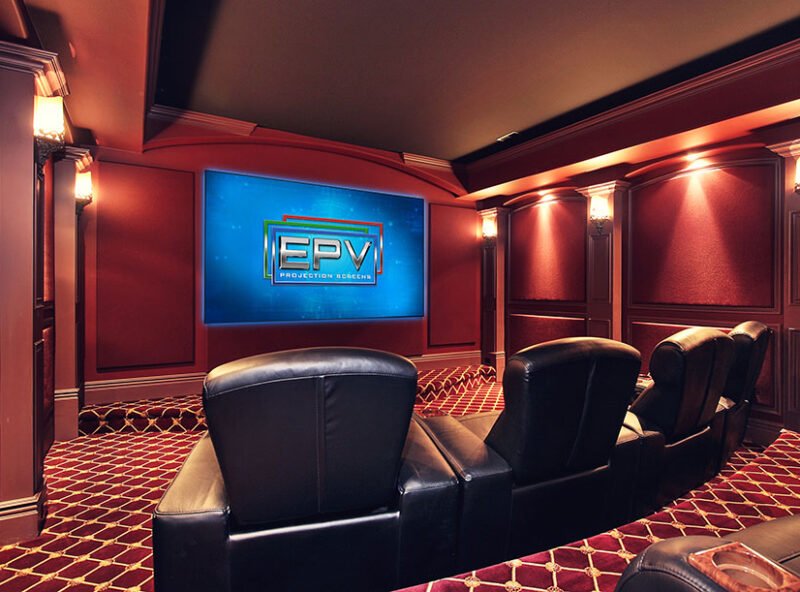
EPV Prime Vision ISF eFinity Edge-Free Projector Screen
Key Features
| Spec | Detail |
| Design | Edge-free, modern profile |
| Sizes | 100″ to 150″ |
| Certification | ISF |
| Format | 16:9 |
Why It Works Here
The EPV Prime Vision ISF eFinity Edge-Free projector screen focuses on consistency without overcomplicating the setup. The edge-free design removes the visible frame, which helps it blend into living spaces instead of standing out like a dedicated theatre install.
ISF certification ensures colors stay accurate, so the image does not shift between bright and dim conditions. That matters in a mixed-use room where lighting changes often. The result is a picture that stays stable, with enough brightness for daytime use and enough control to avoid looking washed out at night.
Best Motorized Screens for Clean, Multi-Use Spaces
A shared living room or multi-use space needs flexibility. A fixed screen stays visible all the time, which can make the room feel cluttered and limit how you use it. A motorized screen quietly solves that by disappearing when you’re done and dropping down only when needed. The key here is not just hiding the screen, but keeping image quality consistent when it’s in use. These are the screens built to stay out of sight without sacrificing how the picture looks when it matters.
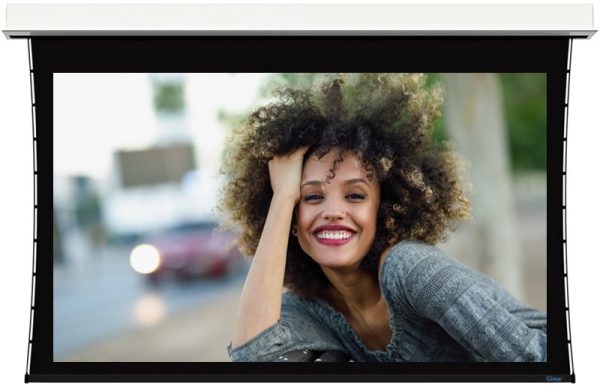
Stewart Filmscreen Cima NT 16:9 (HD) Retractable Above Ceiling Projector Screen
Key Features
| Spec | Detail |
| Type | Motorized, ceiling recessed |
| Materials | Neve (1.1 gain), Tiburon (0.95 gain) |
| Control | IR, IP, and automation systems |
| Design | Above-ceiling hidden installation |
Why It Works Here
The Stewart Filmscreen Cima NT 16:9 (HD) Retractable Above Ceiling screen is built for spaces where you don’t want to see equipment until it’s in use. When retracted, it sits flush in the ceiling, so the room stays clean and uncluttered. When it drops, the surface stays flat enough to keep the image consistent, which avoids the slight ripples that cheaper retractable screens can introduce.
The material options let you adjust to your room. Neve keeps colors natural in dim settings, while Tiburon helps hold contrast when there is some ambient light. That flexibility makes it reliable across different times of day instead of only working in one condition.
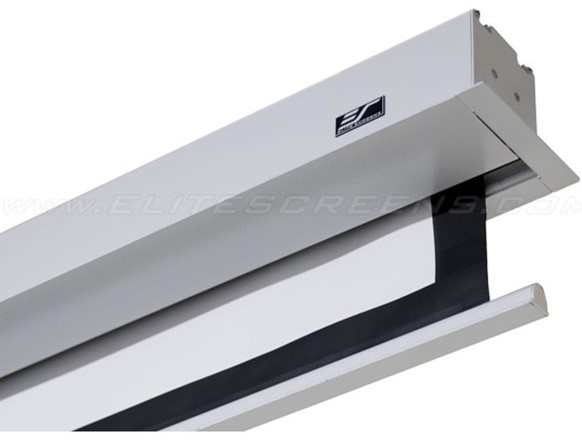
Elite Screens Evanesce Tab-Tension Series
Key Features
| Spec | Detail |
| Type | In-ceiling motorized with tab-tension |
| Material | CineWhite 1.1 gain |
| Control | IR, RF, 12V trigger, Ethernet |
| Design | Concealed housing |
Why It Works Here
The tab-tension system is what makes the Elite Screens Evanesce Tab-Tension Series projector screens stand out. It pulls the material tight from the sides, which keeps the surface flat while the screen is down. That matters because without it, retractable screens can develop slight waves that soften the image.
The 1.1 gain adds enough brightness to keep the picture visible during the day without making it look overly bright at night. Combined with wide light diffusion, the image stays consistent across the room, so people sitting off to the side still see a clear picture.
Best Budget Projector Screens (Best Value Without Overspending)
Budget setups are not about getting the cheapest projector screens. They are about getting something that still holds image quality without pushing your system too far. The problem at this level is inconsistency. Cheap screens can introduce wrinkles, uneven brightness, or poor color balance, which makes the image look unstable. A good budget screen keeps the surface controlled, maintains basic color accuracy, and avoids obvious flaws. These are the screens that give you a clean, usable image that matches your budget.
Elite Screens Aeon Series
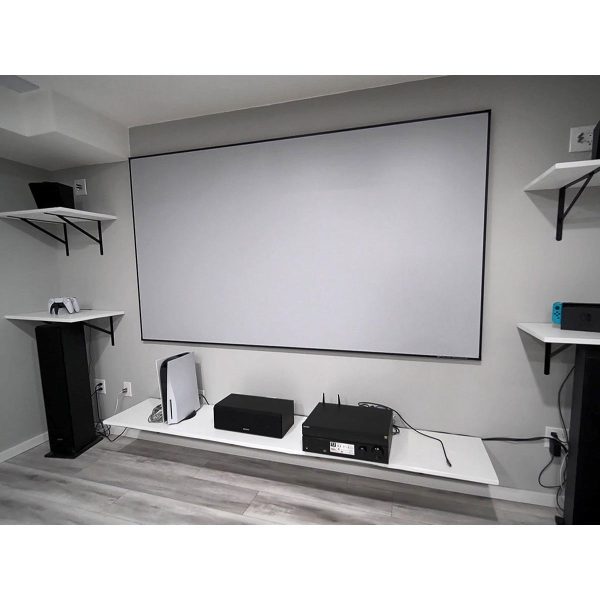
Key Features
| Spec | Detail |
| Price Range | $449.00 – $1,099.00 |
| Type | Fixed frame (edge-free) |
| Material | Matte white |
| Gain | ~1.1 |
Why It Works Here
The Elite Screens Aeon Series projector screens is one of the few entry-level screens that still keeps the surface properly tensioned. That matters because once the surface starts to ripple, fine detail softens and bright areas become uneven. The 1.1 gain gives enough brightness to keep the image visible in normal lighting without pushing it too far, so colors stay balanced instead of looking washed out or overly sharp.
The edge-free design also helps it blend into the room, so it feels more like part of the setup rather than a bulky frame on the wall. For the price, it delivers a stable image that doesn’t fall apart under everyday use.
Pros/Cons
| Pros | Cons |
| Edge-free design makes the image feel larger and more immersive | Fixed frame stays visible on the wall |
| Multiple material options to match different room lighting and setups | Performance depends on choosing the right material |
| ALR options help maintain image clarity in brighter rooms | ALR versions have a narrower viewing angle |
| Wide viewing angle keeps the image consistent across seating | |
| Acoustic option allows speakers behind the screen |
Elite Screens Evanesce B Series
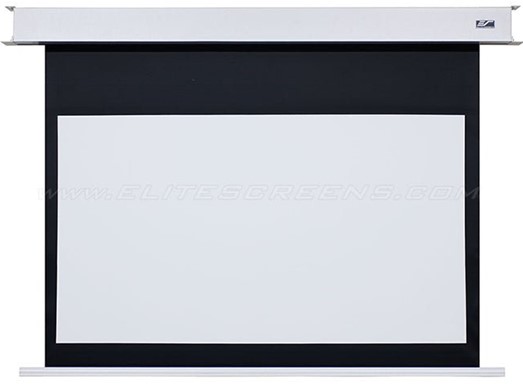
Key Features
| Spec | Detail |
| Price Range | $904.00 – $1,157.00 |
| Type | Motorized retractable |
| Material | Matte white |
| Gain | ~1.0 |
Why It Works Here
The Elite Screens Evanesce B Series projector screens gives you flexibility without jumping into premium pricing. The motorized design lets the screen retract when not in use, which is useful in shared spaces where a fixed screen would take over the room. When deployed, the surface stays reasonably flat, which keeps the image consistent enough for movies, sports, or casual viewing.
The neutral gain keeps brightness controlled, so the image does not look harsh at night or too dim during the day. It is not built for perfect reference accuracy, but it delivers a clean, reliable picture for the price, which is exactly what a budget screen should do.
Pros/Cons
| Pros | Cons |
| Retracts into the ceiling, so the screen stays hidden when not in use | Requires ceiling installation and setup planning |
| Tab-tension system keeps the surface flat for a clean, consistent image | Not as rigid as a fixed frame screen |
| 1.1 gain matte white surface keeps brightness and color balanced | Limited performance in very bright rooms |
| Multiple control options (remote, trigger) make daily use easy |
Best Screens for Ultra Short Throw (UST) Projectors
Ultra short throw setups place the projector inches from the wall, which changes how light hits the screen. It reflects the light incorrectly, which makes the image look uneven, dims certain areas, and reduces contrast. UST screens solve this with a layered surface that redirects the projector’s light toward you while rejecting light from above. These are the screens designed specifically UST setups.
Screen Innovations Zero Edge Pro – 16:9 – UST ALR
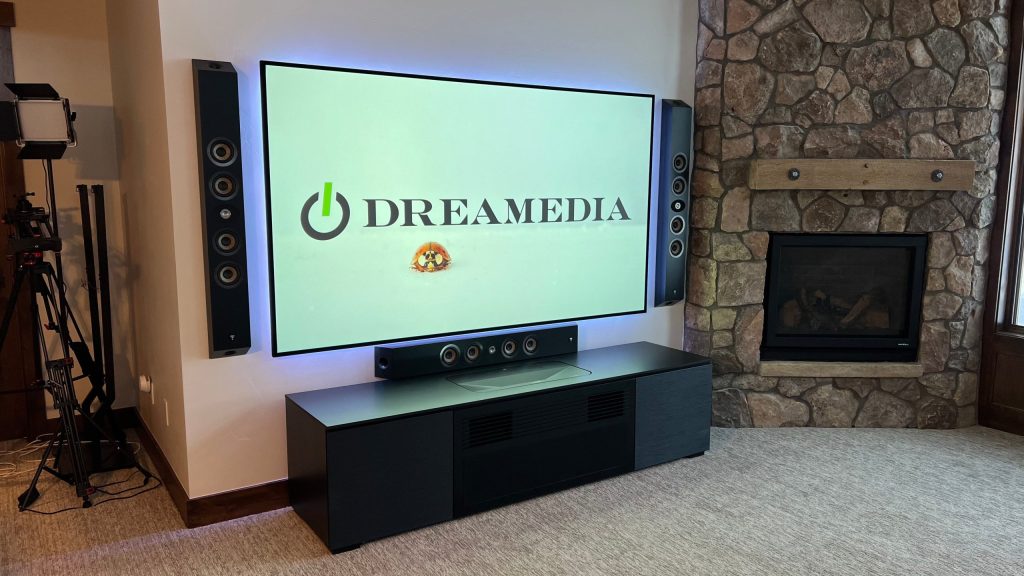
Key Features
| Spec | Detail |
| Price Range | $5,449.37 – $6,823.14 |
| Resolution Support | Up to 8K |
| ALR Performance | ~90% ambient light rejection |
| Viewing Angle | Up to 170° |
| Gain | ~0.6 |
Why It Works Here
The Screen Innovations Zero Edge Pro projector screens is designed around how UST projectors actually behave. The surface structure captures that upward light and redirects it forward, so brightness stays consistent from centre to edge instead of fading out. That alone fixes one of the biggest issues people run into with UST setups.
The high level of ambient light rejection keeps room lighting from interfering, which means darker scenes hold detail instead of turning flat and grey. Even with a lower gain, the image still looks bright because the light is being controlled, not wasted. The wide viewing angle also keeps the picture stable across multiple seats, which suits open living spaces where people are not all sitting in one spot.
Pros/Cons
| Pros | Cons |
| Strong ambient light rejection keeps the image clear even with lights on | Premium pricing compared to standard screens |
| Designed for UST projectors, so brightness stays even across the screen | Requires precise placement for best performance |
| Wide viewing angle keeps the image consistent across multiple seats | Lower gain means it relies on proper projector brightness |
| Thin, edge-free design keeps the setup clean and modern |
EPV Dark Star Max UST Projector Screen
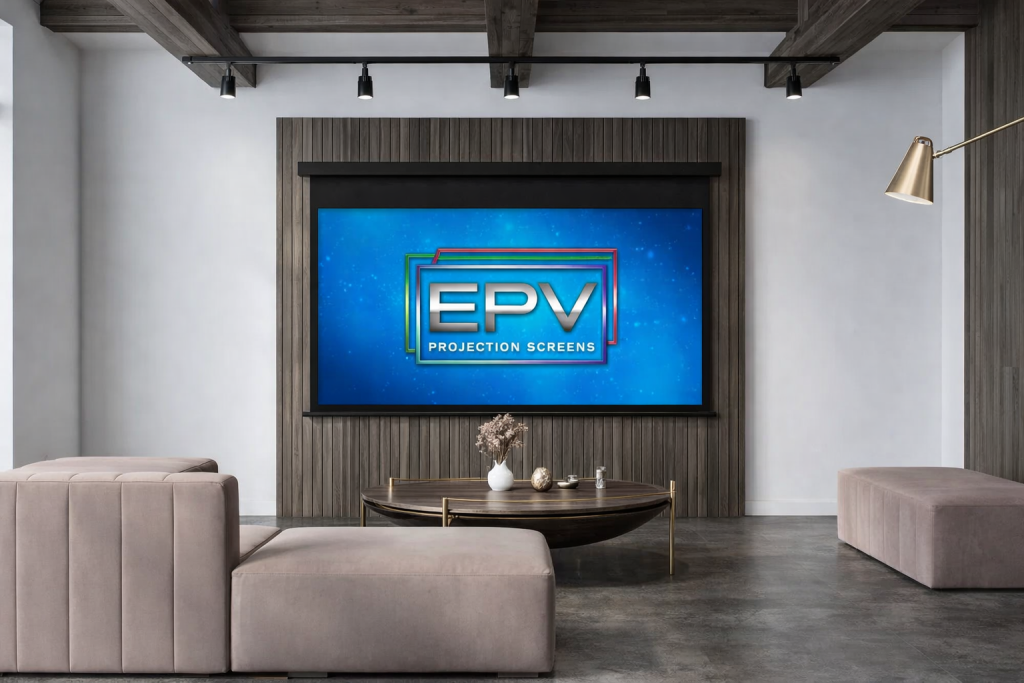
Key Features
| Spec | Detail |
| Price Range | $5,789.00 – $7,492.00 |
| ALR / CLR Performance | Up to 95% overhead light rejection |
| Resolution | 4K HDR ready |
| Certification | ISF |
| Design | Edge-free |
Why It Works Here
This EPV Dark Star Max UST projector screens focuses on keeping contrast intact in real-world conditions. The ALR and CLR material blocks most overhead light, so the image keeps its depth even when the room is not completely dark. That shows up clearly in darker scenes, where details stay visible instead of blending into a dull grey surface.
It also maintains color accuracy, which matters more than people expect. Skin tones look natural, and brightness stays even across the screen without shifting from one side to the other. Because it is built specifically for UST projection angles, the image stays uniform and controlled, giving you a result that feels closer to a large, high-end display rather than a typical projection setup.
Best Screen for Hidden Speaker Setups (Acoustically Transparent)
When speakers sit below the screen, voices don’t line up with the image. You hear dialogue from under the picture instead of from the person speaking. That disconnect breaks immersion quickly. An acoustically transparent screen lets sound pass through, so voices come from the screen while the image stays sharp. These are the projector screens that fixes this problem
EPV Sonic Star AT eFinity Edge-Free Projector Screen
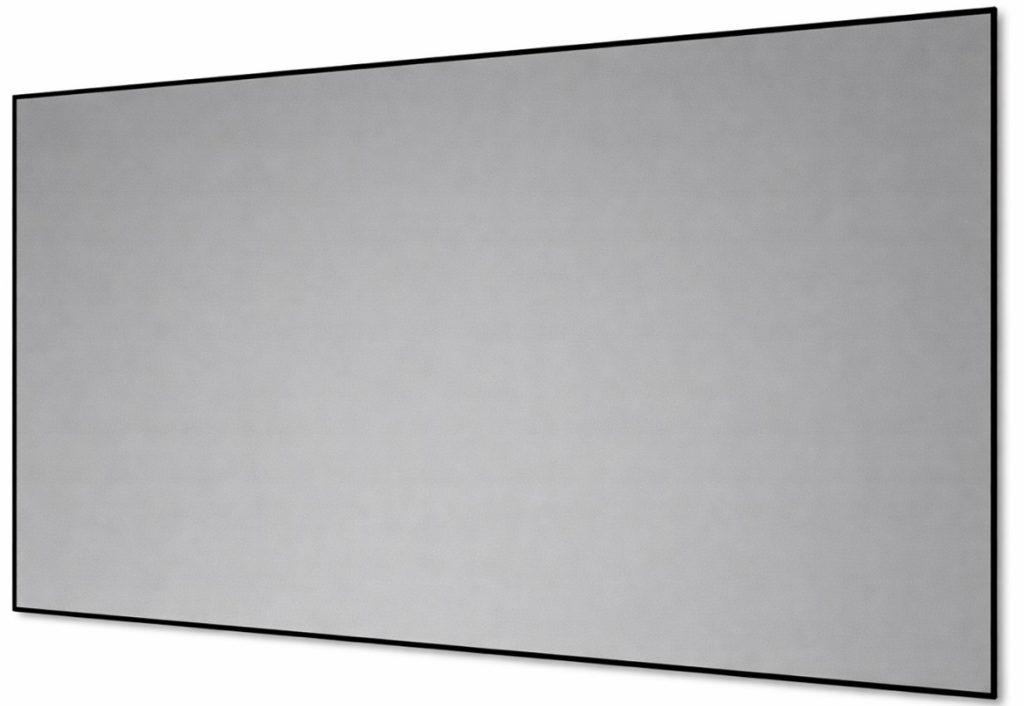
Key Features
| Spec | Detail |
| Price Range | $2,998.00 – $4,948.00 |
| Resolution | 4K / 8K ready |
| Acoustic Design | Micro-perforated (0.55 mm) |
| ALR Performance | ~70% ambient light rejection |
| Design | Edge-free, ultra-thin bezel |
Why It Works Here
The EPV Sonic Star AT eFinity Edge-Free projector screens keeps both sound and image working together without compromise. The micro-perforations are small enough that fine detail stays intact, so you still see clean textures and sharp edges instead of a softened image. At the same time, audio passes through clearly, which makes voices feel like they are coming straight from the actor on screen.
The built-in light rejection also helps in real rooms where lighting is not perfect. Instead of the picture fading, it holds contrast so darker areas still show detail. The edge-free design removes the visible frame, which makes the screen feel more like part of the wall and less like a separate object.
Pros/Cons
| Pros | Cons |
| Lets sound pass through cleanly, so dialogue comes from the screen instead of below it | Slight brightness loss compared to solid (non-acoustic) screens |
| Supports 4K/8K detail, so the image stays sharp even with micro-perforations | Requires precise speaker placement behind the screen |
| Handles some ambient light, so the image stays visible in real rooms | Not as strong as dedicated ALR screens in very bright spaces |
| Wide viewing angle keeps the image consistent across seating | |
| Edge-free design keeps the setup clean and immersive |
EPV SE AT8-ISF Acoustic Series Projector Screen
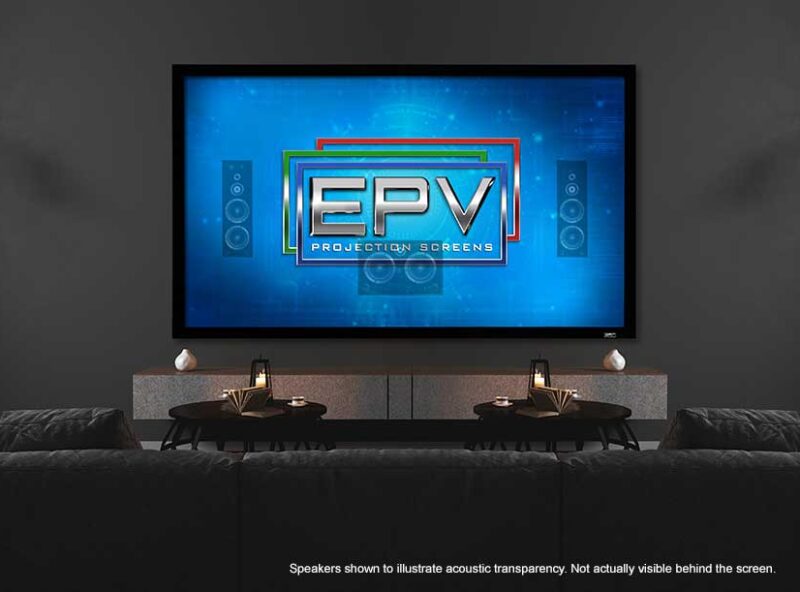
Key Features
| Spec | Detail |
| Price Range | $1,873.00 – $4,338.00 |
| Material | ISF-certified Sonic AT8 |
| Resolution | 8K ready |
| Frame | 2.2″ velvet-coated |
| Compatibility | UST, short throw, standard |
Why It Works Here
The EPV SE AT8-ISF Acoustic Series Projector Screen leans more into precision. The woven surface allows sound to pass through evenly, so dialogue stays clear without distortion. At the same time, it keeps the image tight, avoiding the slight blur that larger perforations can introduce.
The velvet frame absorbs stray light around the edges, which helps the image look more defined instead of slightly faded at the borders. With ISF-certified color accuracy, tones stay natural, so skin doesn’t look off and contrast stays stable. It’s a strong fit when you want both clean audio placement and a picture that holds up under closer viewing.
Pros/Cons
| Pros | Cons |
| Lets sound pass through clearly, so dialogue lines up with the screen | Slight brightness loss compared to solid screens |
| 8K-ready surface keeps fine detail sharp instead of softening | Fixed frame stays visible on the wall |
| ISF-certified color keeps tones accurate and natural | Needs proper setup for best audio alignment |
| Velvet frame absorbs stray light, so edges look cleaner and more defined | |
| Wide viewing angle keeps the image consistent across seating |
Conclusion
A projector screen decides how your system looks every time you press play. It controls how light is reflected, how colors appear, and whether dark scenes stay dark or start to look grey. That is why two setups with similar gear can feel completely different.
The decision is not about picking the most expensive option. It is about choosing a screen that fits how your room actually works. A dark room needs accuracy. A bright space needs light control. A mixed-use room needs balance. Get that match right, and everything improves at once.
If you want it done properly, schedule a consultation with us and get a setup designed around your room, your lighting, and how you actually use the space.