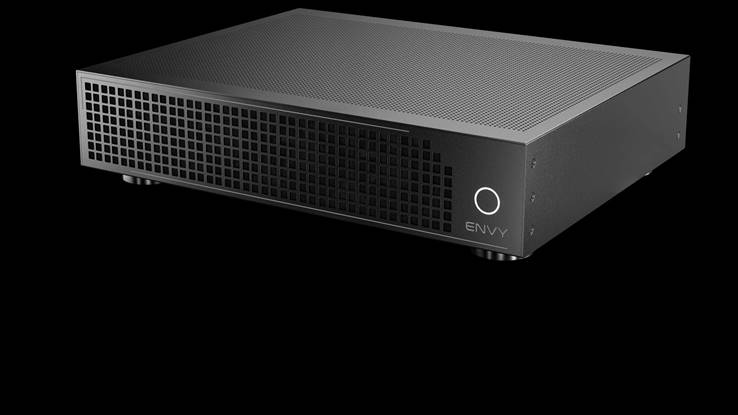


Have you ever watched a movie at home and thought, “This sounds good… but it still doesn’t feel like a real theater”? We see that all the time. The system isn’t broken. The speakers are solid. The volume is there. But something feels slightly disconnected.
Most of the time, it’s not about power. It’s about how sound behaves in the room. If dialogue doesn’t lock cleanly to the screen, your brain notices. If effects jump instead of moving smoothly from one side of the room to the other, it pulls you out of the scene.
In a properly designed home theater, those issues are handled before you ever press play. Speaker placement is mapped carefully. Timing is aligned. Low frequencies are controlled so they hit with weight and then get out of the way. That level of control is what separates a system that sounds impressive from one that feels believable.
This is where Trinnov fits in. It’s not just another processor adding features. It’s a platform built to manage how sound actually moves inside your room. Let’s walk through how its software-based architecture, 3D speaker mapping, and bass control help turn a good home theater into one that truly feels dialed in.
The Architecture of a True Cinema Room
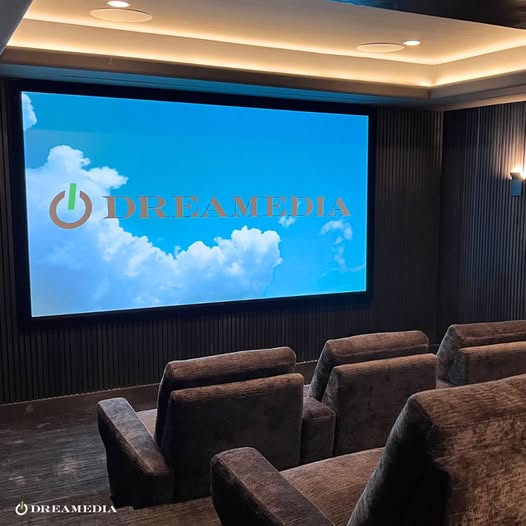
When you walk into a properly designed [home theater], the difference usually isn’t dramatic. It’s controlled. Nothing is shouting for attention. The screen feels balanced in the room. The speakers don’t dominate the walls. But the moment someone speaks on screen, the sound lands exactly where it should. In serious builds, the front speakers sit behind an acoustically transparent screen, so dialogue comes straight from the image instead of below it. Your brain doesn’t have to correct anything. It just locks in.
Coverage is the next piece. In higher-performance rooms, surround speakers aren’t scattered for effect. They’re mapped carefully to support every seating row. The back row shouldn’t feel like an afterthought. If you’ve sat in a room where the rear seats sounded thinner or less defined, you’ve felt what poor planning does. Proper placement fixes that. Overhead channels add real height, not just extra noise, especially in well-designed Dolby Atmos layouts where movement through space is intentional, not accidental.
In larger rooms, it’s common to see 30 or even 48 channels. That density reduces gaps and keeps motion smooth across the room. But we’ve seen it firsthand: more speakers don’t solve alignment problems. Without precise timing and calibration, additional channels can blur imaging instead of sharpening it.
That’s why the processor becomes the quiet control center of the system. And that’s exactly where Trinnov earns its place.
Inside Trinnov’s PC Based Architecture
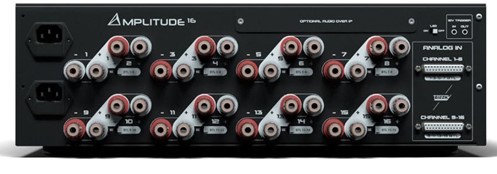
Most surround processors are built around dedicated DSP chips. They decode a format, send it to another section for rendering, then pass it again for room correction. For smaller systems, that works fine. But once you step into larger dedicated home theater rooms with higher channel counts and multiple seating rows, that handoff structure can start to show its limits.
Trinnov takes a different path. Instead of moving the signal from chip to chip, it runs on an Intel-based platform with a custom Linux operating system. In plain terms, that means more computing headroom from the start. Decoding, rendering, speaker alignment, and optimization all happen inside one continuous signal flow. Nothing is stitched together after the fact. It’s handled as one unified process.
That matters most in dense Dolby Atmos layouts, where timing and spatial accuracy define whether motion feels real. When processing stays stable, sound moves smoothly instead of jumping between speakers. That’s why serious home theater design begins with the processor.
3D Acoustic Mapping Beyond Basic Room Correction
3D Acoustic Mapping Beyond Basic Room Correction
Earlier, we talked about why processing architecture matters. All that computing power inside a serious home theater system isn’t there just to decode formats. It’s there to understand space. Because once you move beyond basic surround sound, placement becomes everything.
Most processors assume your speakers are exactly where you told the installer they are. Front left. Surround right. Top rear. But real rooms aren’t perfect diagrams. A surround speaker shifts slightly to clear a doorway. A height channel moves to avoid a ceiling beam. Those small adjustments seem minor, but in complex systems, they soften motion and blur imaging.
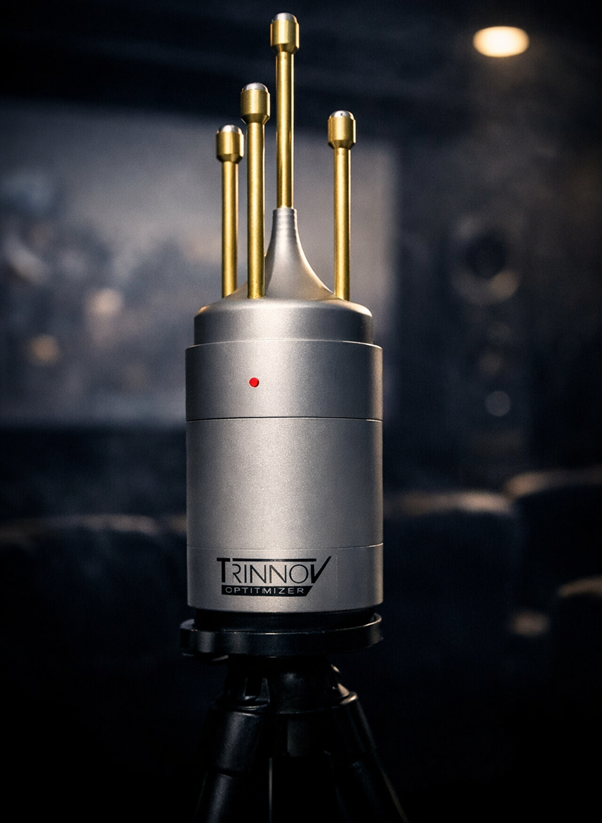
Trinnov approaches the problem differently. Its 3D microphone does not just measure tone or loudness. It calculates the real three-dimensional position of every speaker, including distance, angle, height, and arrival time. Instead of guessing, it builds an actual spatial model of your room.
From there, it does more than smooth frequency response. It reconstructs the soundstage. If a surround sits slightly forward, movement still tracks cleanly across the room. And, if a height speaker is off angle, overhead effects remain believable. Spatial accuracy, however, solves only part of the problems.
But even when the midrange and high frequencies are mapped precisely in three dimensions, another layer of the room still behaves unpredictably. Low frequencies do not move like directional objects. They build pressure and interact with walls. And that is where bass becomes a completely different engineering problem.
Bass Behavior and the Foundation of Immersion
When we talked about 3D mapping, we were solving spatial accuracy. That’s what keeps dialogue locked to the screen and allows effects to move naturally across the room. But bass introduces a completely different variable. You’re no longer dealing with directional sound. You’re dealing with energy filling a space.
Low frequencies are physically long waves. In a real room, they reflect off boundaries and build pressure in certain areas while cancelling in others. That’s why one seat can feel tight while another feel bloated or thin. It’s not a subwoofer problem. It’s the room interacting with the bass.
Low bass does not stop the moment the signal stops. It continues moving around the room for a short time. When that happens, it can blur the next sound and reduce clarity. Traditional room correction can lower volume peaks, but it cannot control how long that bass energy remains in the space.
This is where Trinnov moves beyond simple equalization. Instead of treating bass as a tone to flatten, it analyzes how low-frequency energy behaves across multiple listening positions. It studies timing, pressure distribution, and decay. Then it coordinates multiple subwoofers so they work together to control how energy builds and how it stops.
And because this control is built into the processing architecture itself, it becomes part of the overall system design rather than a band-aid fix. That foundation is what makes WaveForming possible. And WaveForming is where Trinnov takes control of bass behavior to an even deeper level.
WaveForming Engineering the Behavior of Bass Energy
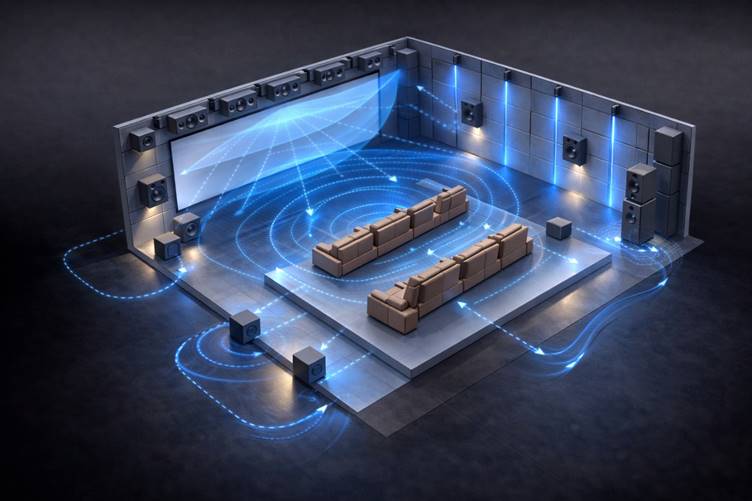
When we talked about 3D mapping, we were solving a spatial precision problem. That’s what keeps dialogue locked to the screen and allows effects to move smoothly across the room. Then we stepped into bass behavior and identified a different issue. Low frequencies don’t behave directionally. They build pressure and reflect. So even if spatial placement is perfect, bass can still ruin the experience.
WaveForming is Trinnov’s answer to that problem. Instead of trying to “correct” bass after it misbehaves, Trinnov approaches it as something that must be shaped from the start. During calibration, the processor measures low-frequency behavior across multiple listening positions, often nine to twenty-five points. It doesn’t just look at volume. It studies timing, pressure build-up, and decay. In simple terms, it learns how bass moves through your room.
From there, each subwoofer is treated as its own controlled source. This is where Multiple Sources Multiple Controllers comes into play. Front subwoofers are timed to generate a controlled wave that moves evenly toward the seating area. Rear subwoofers are timed differently. They act as active absorbers, introducing carefully shaped signals that reduce returning reflections before those reflections stack and ring.
That coordination changes everything. Bass no longer blooms unpredictably. Decay shortens, impact tightens, and pressure becomes more consistent from seat to seat. That’s why when we sit down to help clients build your system, bass strategy is discussed from the beginning, not after the room is finished.
And because this control lives inside Trinnov’s processing architecture, it isn’t a patch layered on top. It’s part of the system’s foundation. Spatial precision handles where sound appears. WaveForming handles how bass behaves.
Native Rate Signal Integrity and 64 Bit Precision
WaveForming solves how bass behaves in the room. It controls energy after it leaves the speakers. But that raises an important question. What about the signal before it ever gets there?
In many surround processors, the moment room correction turns on, something subtle happens behind the scenes. High-resolution audio is often reduced internally so the DSP can keep up. A 96 kHz track may be processed at 48 kHz. It still sounds clean. But fine timing detail and phase accuracy get simplified to make the math easier. In a serious home theater system, those micro-timing cues are what create depth, separation, and spatial realism.
Trinnov was built differently. Audio remains at its native rate, whether 96 or 192 kHz, all the way through the signal path. No internal downsampling. Every calculation runs in 64-bit floating point precision. That simply means the processor has enormous computational headroom, so corrections happen with extreme accuracy instead of rounding shortcuts.
This becomes critical when applying very long FIR filters, sometimes exceeding 65,000 taps. These filters shape both tone and timing simultaneously. If the processor lacks precision, tiny errors accumulate and soften transients. With Trinnov’s architecture, they don’t.
And that’s the key. The same processing foundation that powers 3D speaker mapping and WaveForming in advanced Dolby Atmos layouts also protects the integrity of the source itself. Nothing is stripped away to make the system work. Everything operates from a position of surplus headroom.
Professional Tools and System Flexibility
Up to this point, we’ve solved three major problems. 3D acoustic mapping handled spatial precision. WaveForming addressed bass behavior in the time domain. Native-rate processing protected signal integrity. But once that foundation is solid, this is where Trinnov really starts to separate itself. Not with marketing features, but with real tools that let us fine-tune a home theater system the way it should be tuned.
Tweeter time-domain alignment handles the highest frequencies, where even tiny timing shifts can blur imaging. You may not hear it as an error, but dialogue can feel slightly detached from the screen. When those drivers are synchronized, voices snap into place and movement across the front stage feels stable.
Group delay correction looks at timing across frequency bands, especially around crossover points. If bass and midrange arrive at different moments, impact softens and clarity drops. Trinnov aligns those layers so they launch and stop together, creating tighter, more cohesive sound without changing the character of the system.
Then there is active crossover control. Instead of relying only on fixed passive components inside a speaker, integrators can electronically define crossover slopes and points for demanding dedicated home theater rooms. Add preset management, remote diagnostics, and ongoing software updates, and the system becomes something rare in this category. It does not age. It evolves.
The Engineered Structure of a Dreamedia Trinnov Theater
A serious home theater isn’t built by stacking gear into a rack. It’s engineered. Every decision connects to another one. Speaker layout affects processing. Processing affects amplification. Subwoofer geometry affects seat-to-seat consistency. In a Dreamedia-designed Trinnov system, the room is treated as one controlled environment, not a collection of parts.
Trinnov Altitude 16
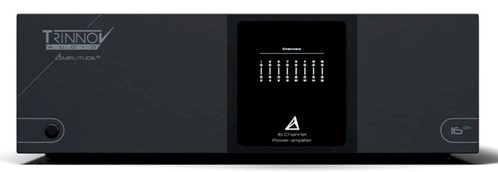
In many dedicated home theater rooms, the Trinnov Altitude 16 becomes the structural core. It handles immersive audio decoding, 3D acoustic mapping, bass optimization, and time-domain alignment within a single unified architecture.
Trinnov Altitude 24 Channel Surround Processor
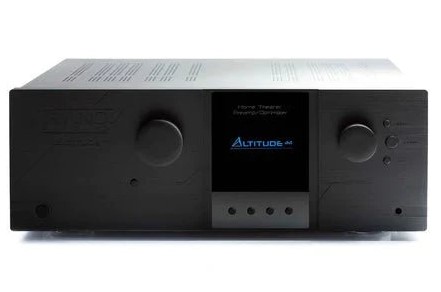
As layouts grow, so do the demands. The Trinnov Altitude 24 Channel Surround Processor supports higher channel density and more advanced routing for multi-row seating and expanded immersive arrays. That flexibility matters. Instead of optimizing one prime seat, you can design for even coverage across the entire room.
Trinnov Altitude 32
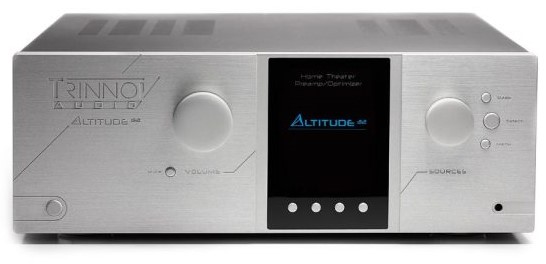
The Trinnov Altitude 32 moves into full reference territory. Larger rooms with extensive height channels or WaveForming subwoofer arrays rely on its processing headroom and routing depth. At this level, stability becomes just as important as capability.
Trinnov Altitude 48ext
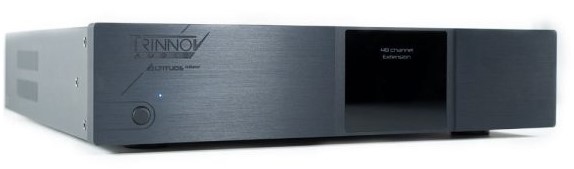
For large-format theaters, the Trinnov Altitude 48ext expands processing up to 48 channels. This allows for complex subwoofer geometry, advanced multi-zone bass management, and full spatial reconstruction across expansive seating areas.
Trinnov Amplitude 16
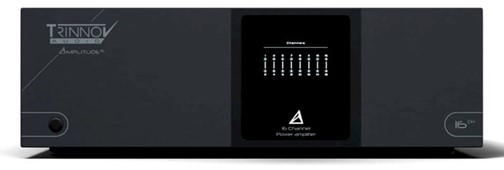
Processing power means very little without stable amplification. The Trinnov Amplitude 16 delivers sixteen channels of controlled Class-D power designed to match immersive layouts without compression or instability.
In dense home theater systems, weak amplification shows up quickly. Surround fields collapse. Dynamics flatten. The Amplitude 16 maintains authority so calibrated speakers behave exactly as intended, even at reference playback levels.
Trinnov Amplitude 8
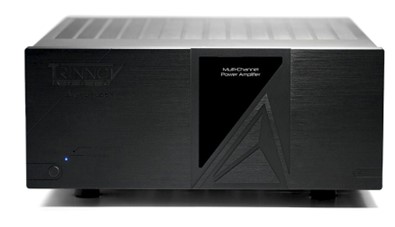
Rooms evolve over time. Additional height channels, expanded side surrounds, or secondary listening zones require amplification that integrates seamlessly. The Trinnov Amplitude 8 adds eight channels while preserving tonal consistency. That consistency keeps expansion deliberate.
Trinnov Amplitude 8m
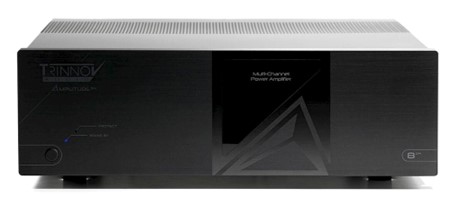
Front-stage speakers and larger theaters demand greater output headroom. The Trinnov Amplitude 8m increases available power while maintaining the same integration philosophy. It ensures peak moments stay clean and controlled.
Trinnov Amethyst HIFI Preamplifier
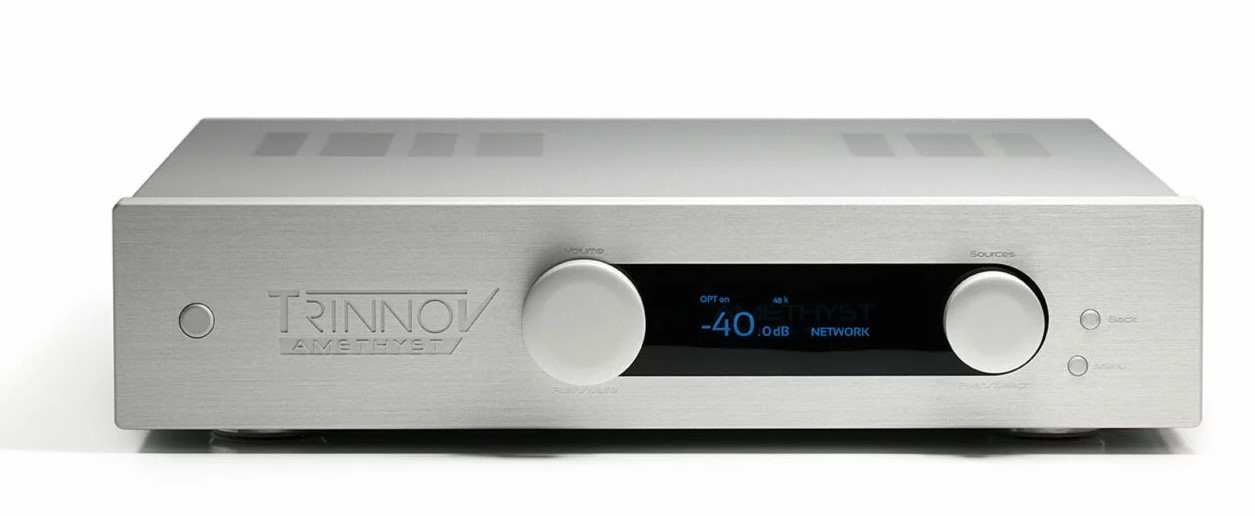
Not every space is a full cinematic build. The Trinnov Amethyst HiFi Preamplifier brings Trinnov optimization into two-channel environments without compromising signal integrity. For hybrid media rooms or dedicated stereo listening spaces, it preserves native-rate audio while applying the same spatial and timing intelligence found in larger immersive systems.
Supported Trinnov Components
| Product | Role in System | Application Scope |
| Altitude 16 | Core immersive processor | Dedicated private cinemas |
| Altitude 24 | Expanded channel processor | Multi-row or complex layouts |
| Altitude 32 | High-channel immersive processor | Large-format theaters |
| Altitude 48ext | 48-channel reference processor | Extreme custom builds |
| Amplitude 16 | 16-channel amplifier | Dense immersive systems |
| Amplitude 8 | 8-channel amplifier | Modular expansion |
| Amplitude 8m | High-output 8-channel amplifier | Large or demanding rooms |
| Amethyst HIFI | Stereo processor with optimization | Reference music systems |
Design Consultation: Start With the Room
All of this only works when it’s planned as one system. Processing, speakers, subwoofer placement, seating, and screen size all affect each other. Once walls close and wiring is in place, changes get expensive. That’s why we at Dreammedia begin with a proper design consultation.
We start with your room. Dimensions. Layout. Listening goals. Then we map speaker positions, bass strategy, and processing requirements around what the space can truly support. From there, we recommend the right Trinnov platform and supporting components. If you’re serious about building it right, this is the first step. Schedule your Dreamedia Design Consultation here.
Conclusion
When you really break it down, what makes a theater feel cinematic isn’t just more speakers or bigger amps. It’s control. Trinnov brings that control into focus in a way most processors simply can’t. Its 3D speaker mapping keeps dialogue locked to the screen instead of floating. Its bass management and WaveForming stabilize low frequencies so impact feels tight, not bloated. And the platform’s processing headroom keeps all of that precision intact without lowering resolution or simplifying the signal.